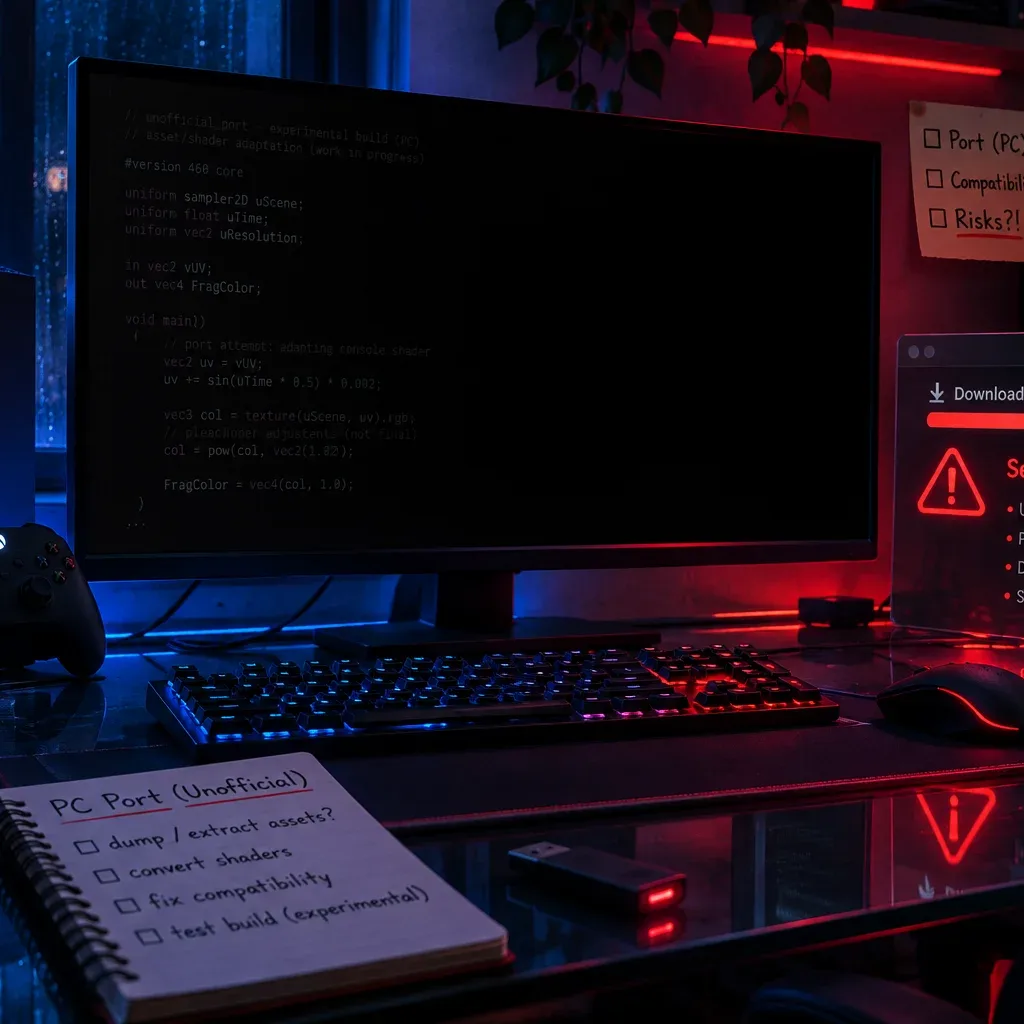
The removal of the Leonida GTA 6 PC project is best examined through the available records. In a fast moving dispute, three questions should be kept separate: what a rights holder alleges, what a hosting platform does and what a developer says happened. Treating those as interchangeable can overstate the evidence.
Mashable’s report, available through Yahoo, describes the shutdown of the unofficial effort and an administrator’s separate claim about the project’s Discord server. The two events should not be collapsed into one verified account. A published platform notice and a participant’s explanation carry different kinds of evidential weight.
20 November: the date identified in the complaint
Take-Two’s notice says unauthorised files from an Xbox Series version of Grand Theft Auto VI were distributed on 20 November. This is the rights holder’s account within its complaint. It provides a starting point for the company’s allegation, rather than an independent forensic reconstruction of the leak.
Dates require care in a story involving several components. The appearance of game data and the later availability of a usable executable can be separate events. Treating every reference to “the leak” as the same moment can produce an apparently tidy timeline that obscures what actually became available.
21 November: the project described by Take-Two
The same notice says Leonida opened the following day with the aim of running the Xbox version on PC. Take-Two disputes the project’s instruction that users provide their own game files, arguing that the requirement points to the unauthorised material already circulating. That reasoning is central to the company’s complaint.
The dispute centres on the relationship between the tool and its required material. A repository can be described separately from the game files it expects, yet its intended use remains relevant to the company’s argument. That leaves a substantive disagreement about purpose and operation, beyond the wording on a project’s introductory page.
24 November: a public notice and a network removal
GitHub’s record says it processed the notice against a network of 3,007 repositories. That figure describes the scope of the platform action. It does not mean 3,007 separate games existed, nor that thousands of developers had independently completed working conversions.
A fork is a separate copy of a repository within GitHub’s development model. Copies may contain different changes or simply preserve an existing state. Counting them can show how widely a project spread, but it cannot establish how much original engineering each copy contributed.
A takedown notice is not a court judgment
GitHub’s own policy describes a notice process for copyright complaints and a counter notice process for alleged mistakes or misidentification. The platform explains that evaluating the merits belongs to the parties. Its publication of a notice therefore documents a complaint and a response, rather than providing a judicial ruling on every disputed question.
That distinction cuts both ways. It would be wrong to treat removal as proof that every allegation has been adjudicated. It would also be wrong to dismiss a documented complaint merely because no judgment is presented. The concrete news is that a rights holder asserted infringement and the hosting platform acted.
Why the whole network matters
GitHub’s submission guidance describes circumstances in which a complaint can cover an actively expanding network of forks. This helps explain why the removal total can be much larger than one prominent repository. It is a procedural explanation, not evidence that every copy had been individually reviewed by an outside investigator.
For a development community, losing a shared repository could disrupt issue tracking, collaboration and access to a common history. The extent of that disruption would depend on its working arrangements. Developers would need to restore those working arrangements before collaboration could continue on comparable terms.
The loss of a common discussion space could create a different kind of interruption. Contributors may still possess their own work while losing access to conversations explaining why a change was made or which problem remained unsolved. Rebuilding that context can consume time even when code survives elsewhere. This is a practical reason a project might slow after a hosting disruption, without assuming that every participant has abandoned it.
The claims that still need separate evidence
Mashable attributes the Discord shutdown account to a project administrator. Without a separate platform record, that detail should retain its attribution. A replacement community could preserve some participants and still lose the shared habits that made collaboration effective. Moving the conversation is therefore a different task from preserving its technical progress.
There is also no direct line from an unofficial project’s progress to Rockstar’s release planning. A community demonstration cannot announce an official version, establish its specifications or set its launch date. Those matters require information from the publisher or developer.
The Take-Two takedown has made the cost of this effort broader than solving a compatibility problem. Contributors also face uncertainty about where they can collaborate and whether their shared work will remain accessible. That uncertainty can affect momentum even before a technical obstacle appears. Whatever follows the Leonida name, the infrastructure supporting a project has become part of its story.