Workplace report

The Rockstar union vote has delivered a clear rejection of formal recognition across the company’s UK workforce. The result gives management a mandate on the specific agreement put to staff, while leaving a separate question open: how employees want their concerns handled after the launch of GTA 6.
GamesRadar reports that 1,163 employees voted against recognition and 381 supported it, with turnout reaching 93.2%. Those figures describe an exercise in workplace participation. They do not, by themselves, explain why individual developers chose either side. The agreement now lacks the support needed to become the workforce’s chosen arrangement.
A decisive result, with a precise meaning
The reported totals amount to 1,544 votes. Of those cast, approximately 75.3% opposed the agreement and 24.7% supported it. This was not a close contest. However, the result concerns formal recognition of a particular union arrangement, rather than an assessment of every employment policy at Rockstar.
| Measure | Result |
|---|---|
| Against recognition | 1,163 votes |
| For recognition | 381 votes |
| Turnout | 93.2% |
The IWGB’s own news index describes the ballot as running from 12 to 26 November. Its timing placed a decision about workplace representation alongside a major moment for Rockstar’s public identity. That overlap makes the story prominent, but chronology cannot establish that the game’s reception determined the result.
Nor should support for recognition be confused with a wish to stop work. A recognition ballot asks whether a union should have a formal relationship with an employer. It is a different question from whether employees support a strike, a particular pay claim or a change to a production schedule.
Management sees support for its approach
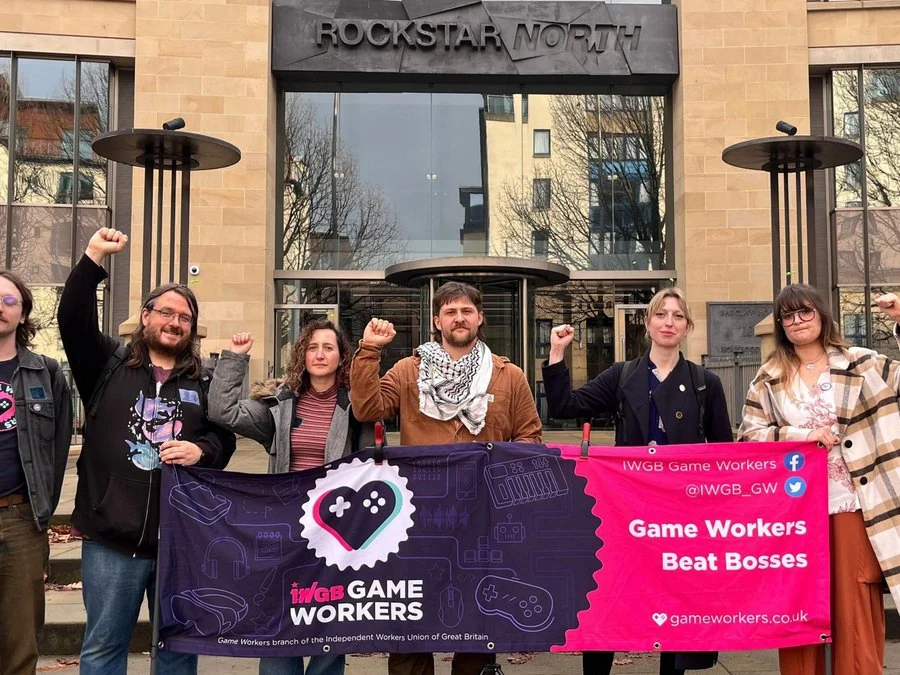
In a statement supplied to GamesRadar, Rockstar publishing chief Jennifer Kolbe interpreted the outcome as support for the company’s direct relationships with employees. She also expressed pride in the team and its work. That is the company’s interpretation of the result.
A secret ballot cannot provide the detail that a published survey might. Some employees may have judged the proposed arrangement itself; others may have weighed their existing experience of communication. Without testimony or research, selecting one explanation and applying it to the workforce would turn interpretation into an unsupported claim.
If direct communication is the preferred approach, its value will be judged through outcomes rather than the ballot alone. Can employees obtain clear answers about decisions affecting them? Are concerns followed through? Those are reasonable questions for any workplace, and they remain relevant whichever form of representation staff choose. A recognition result can decide a proposed relationship; it cannot measure the quality of every subsequent conversation. Practical outcomes will shape employees’ judgments.
The minority remains part of the workforce
The 381 supporting votes also deserve to be represented accurately. They establish that hundreds of participants wanted the proposed arrangement, even though they did not secure a majority. A decisive defeat does not make that preference disappear. Equally, those votes cannot be treated as a measure of dissatisfaction among everyone else.
What recognition changes in practice
UK government guidance describes recognised unions negotiating collectively over matters such as pay, hours and holiday entitlement. The practical issue is therefore a channel for discussing employment conditions. Recognition concerns who participates in those discussions and how that relationship operates, rather than handing creative control over a game to a union.
Take a hypothetical change to working hours. An employee may want to know how it affects childcare, travel or an existing commitment. Several colleagues may have similar questions. An agreed bargaining process gives those shared concerns a formal route into negotiation; direct communication handles them through the company’s existing channels. The practical difference lies in that process.
Government guidance also distinguishes statutory recognition from voluntary recognition. The existence of different routes helps explain why workplace representation is more complicated than a permanent choice between two fixed positions. An employer and a union can discuss their relationship through a voluntary agreement. The current result, however, concerns the arrangement that employees were actually asked to approve.
What comes after the count
Engadget reports that the IWGB’s Rockstar branch intends to continue organising. For management, the result creates an opportunity to demonstrate the responsiveness of its preferred approach. For organisers, it presents the challenge of persuading colleagues who rejected recognition. Both tasks depend on relationships built through ordinary working life, beyond the ballot itself.
For readers following Rockstar Games primarily through its releases, the temptation is to turn a workplace story into another verdict on a game. That shortcut misses the subject. Developers make products, but they also negotiate hours, compensation and career prospects. Commercial success does not automatically settle those questions.
The immediate outcome favours management’s approach, while the supporting minority gives the union a constituency to work with. Neither side can substitute a public statement for the daily experience of employees. Questions about hours, compensation and communication will still arrive at desks and in meetings. How effectively they are answered will shape the workplace after the attention surrounding the vote has moved on.