
Player guide | Chapter 1 ending and chapter 2 spoilers

A useful GTA 6 early money route combines two discoveries: saleable goods at an abandoned warehouse and cash hidden in Jason’s former bedroom. Mashable’s published guide puts the combined return at up to $19,000. The important detail is timing. It recommends making the trip after chapter 2 begins, once basic transport and a buyer are available.
Story warning: the instructions below reveal changes to Jason’s home and finances at the end of chapter 1. Anyone still exploring the opening without spoilers should return after reaching the next chapter. Plan the two stops around your transport and contacts, allowing enough time to sell whatever you decide to collect.
Before leaving: solve the selling problem
The warehouse reward is not a single cash pickup. Much of its value comes from goods that must be carried away and sold. GAMINGbible identifies the site as Apollo Aggregates, near Hamlet in South Vice-Dale County, and describes searching its storage areas, offices and nearby vehicles for valuables.
Think of the trip as a collection and delivery job. Before travelling, work out whether your current progress gives you an available buyer and whether your vehicle can carry what you intend to take. Otherwise, a promising discovery can become a long detour with unsold cargo.
Why chapter 2 is the recommended window
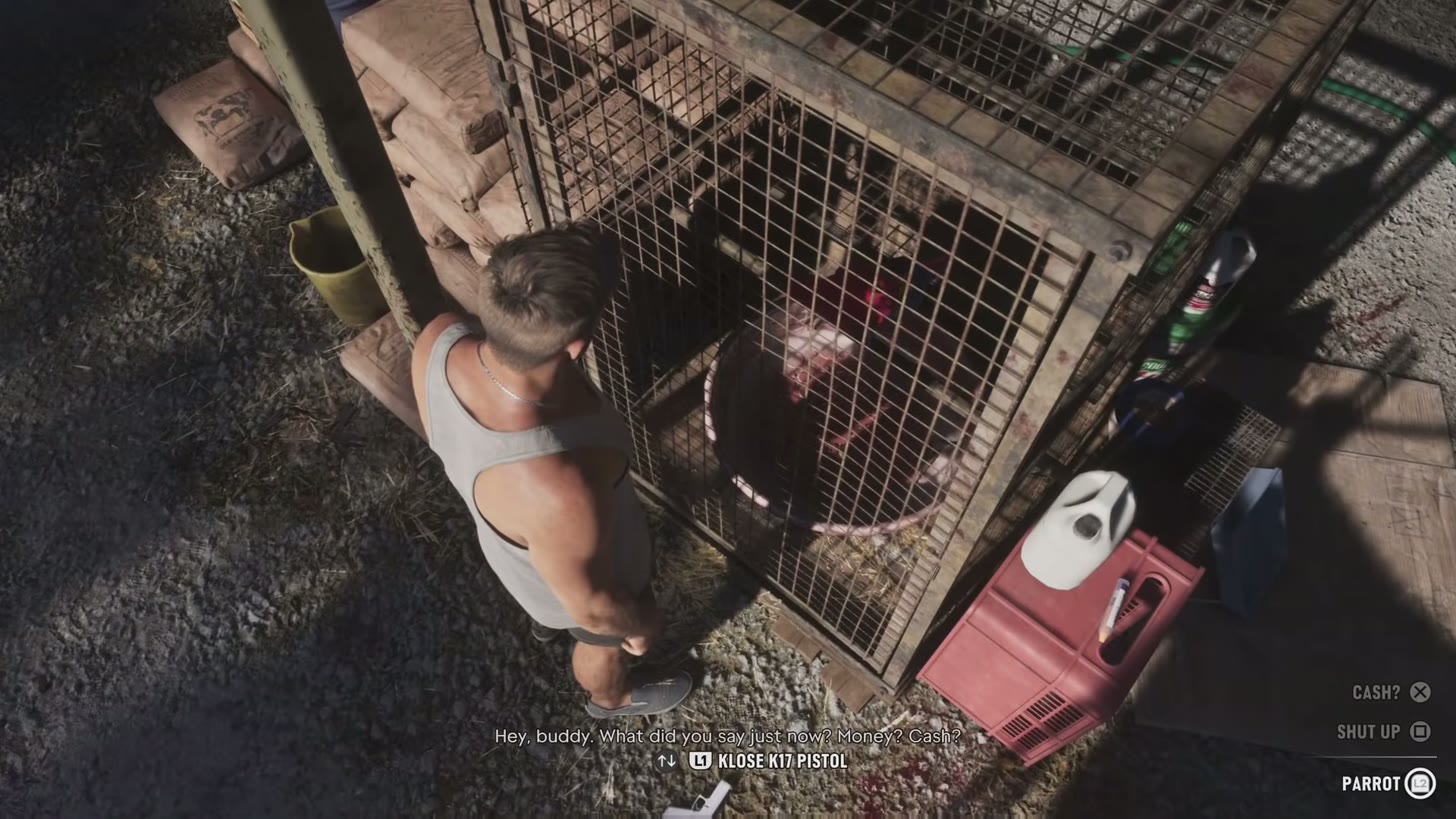
Mashable warns that held money is lost at the chapter-one transition. Its guide recommends progressing through the opening missions of chapter 2 before attempting the run, so a fence and transport are available. Bringing both protagonists can also help with carrying the warehouse contents.
Do not interpret that advice as a claim that every player must follow an identical schedule. Available contacts depend on story progress. The practical aim is to reach a point where collecting the goods leads directly to selling them, rather than assuming that finding loot automatically produces spendable money.
First stop: collect the warehouse goods
- Find Apollo Aggregates. The identifying landmark is the Apollo sign outside the warehouse. Use that name to confirm the location rather than treating every industrial building near Hamlet as the destination.
- Search methodically. GAMINGbible lists marked bills, drugs, weapons and a collectible card among the finds. Check the surrounding spaces it identifies before deciding the site is empty.
- Plan the load. The guide advises a vehicle with enough storage and notes that more than one trip may be necessary. Prioritise a clear route between collection and sale.
- Separate cash from keepsakes. A collectible card can have value beyond its immediate selling price. Decide whether you want to keep it before treating every item as disposable stock.
The reported warehouse return varies. Mashable describes approximately $10,000 to $14,000, while GAMINGbible reports around $14,000 from its discovery. Treat those figures as published outcomes, not a promise that every visit, save or collection of items will deliver an identical amount.
That distinction prevents a common misunderstanding. A guide’s headline value may combine several objects and a completed sale. If you collect only part of the contents or keep something, the spendable total can differ. Compare what you actually sold with what the route describes before assuming something has gone wrong.
Keep a simple record of what you collected and what the buyer paid. It helps distinguish a missed item from a difference in the quoted return. If the outing requires another journey, decide whether that extra time still suits what you wanted from the session.
Second stop: recover Jason’s cash
Mashable identifies a separate $5,000 stash in Jason’s old bedroom. By chapter 2, the house is damaged and its neighbourhood is a police heat area. Its suggested approach is to stop outside that area, continue quietly on foot and reach the back of the property.
Approach quietly, then leave with the objective complete
Unlike the warehouse goods, this part of the route concerns a cash stash. The main planning problem is access. Keep the objective narrow: reach the bedroom, recover the money and leave. A published description of a manageable approach should not be read as a guarantee that police attention is impossible.
If the situation looks different from the guide, pause and assess it instead of forcing a memorised route. Check the information your game provides about your surroundings and current objective. A small adjustment is more sensible than turning a modest recovery trip into an unnecessary confrontation.
What the two stops are worth
The calculation is straightforward: a reported $10,000 to $14,000 from warehouse goods, plus the $5,000 stash, produces roughly $15,000 to $19,000. That is a range, and it depends on successfully collecting and converting the relevant valuables. It is not an infinite money method or a guaranteed payment for merely visiting both places.
The strongest version of this route is a planned outing: confirm the buyer, arrange transport, identify what you want to keep, and approach the old house cautiously. The money is useful because it gives the next stage breathing room. Avoid spending that advantage repairing problems created by rushing to collect it.