
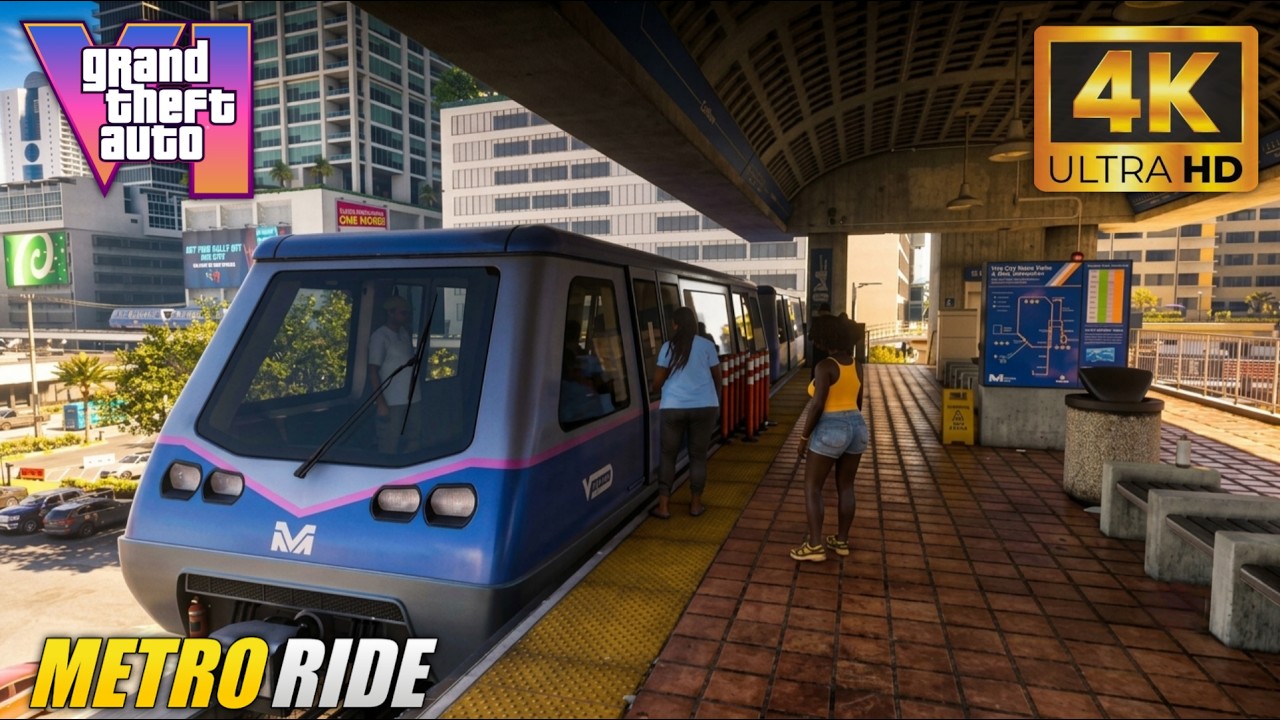
Metro’s GTA 6 review lands on an interesting combination: a score of 9/10 and a list of reservations that reaches into the game’s everyday rhythm. Its published summary praises the technical achievement while questioning whether Rockstar’s commitment to realism always makes the experience more enjoyable. A high score has not ended the argument.
That is useful criticism. A large production can achieve extraordinary things without resolving every tension in its design. The relevant question is not whether a reviewer found faults in a celebrated release. It is whether those faults describe something a prospective player will encounter frequently enough to care about.
What the published verdict actually says
Metro’s assessment: the review summary commends the visuals, the detail of the open world, memorable story missions, side quests and Lucia. Its objections include familiar gameplay, unremarkable action, dull driving, mundane tasks, forgettable dialogue and a less engaging Jason. The reviewed version is listed as PlayStation 5.
Metro’s objections are revealing because they concern experiences repeated throughout a playthrough. Taken together, they suggest an unusual balance: the world and its major events impress more consistently than some of the actions connecting them. That distinction deserves attention because connecting actions occupy so much of an open world’s running time.
The score is an overall judgment
A nine does not mean that nine out of every ten mechanics are excellent. Nor does it imply that the remaining shortcomings are trivial. Review scores compress a complicated response into a convenient signal. The accompanying criticism tells readers how the reviewer arrived there and where their own response might diverge.
Two people can agree that a game is exceptional and still recommend different ways of approaching it. One might value unhurried exploration. Another might prefer concentrated story sessions. The score alone cannot communicate that difference, particularly when a game asks for sustained attention across many kinds of activity.
Realism has to earn its place in the routine
Realism is often discussed as a visual achievement, but its more consequential form concerns time. How long should an action take? How much attention should it require? When does performing it deepen identification with a character, and when does it merely delay the next interesting decision?
There is no universal answer. A deliberate animation can make an action feel tangible the first time and cumbersome on the fiftieth. A familiar routine can establish a home, yet lose its appeal if the player experiences it as compulsory maintenance. Frequency changes the meaning of the same design choice.
Metro’s reservations are therefore more useful than a broad complaint that a game is slow. They invite readers to consider their tolerance for repeated, ordinary actions. Someone who enjoys inhabiting a character’s day may judge that time differently from someone looking for an uninterrupted sequence of dramatic encounters.
Driving deserves particular scrutiny
The criticism of driving carries extra weight in a game built around travelling through a large environment. A journey is rarely just empty space between missions. It can establish mood, encourage observation or provide the pleasure of handling a vehicle. If none of those works for a particular player, distance becomes friction.
That is why greater visual fidelity cannot settle an argument about driving feel. A convincing road surface and a satisfying steering response address different needs. The first supports belief in a place. The second determines whether moving through it remains engaging after its appearance stops being surprising.
Readers can also separate personal preference from a claim about technical performance. Calling a journey dull describes an experience; reporting a repeatable control fault describes a different kind of problem. Both can be valuable, but they should not be weighed identically. The most helpful use of a review is to identify which observations match your priorities, then decide how much those observations should influence your own expectations for the game.
Character reactions show why consensus has limits
Metro’s less enthusiastic response to Jason contrasts with Jordan Middler’s VGC review, which treats the relationship between both protagonists as central to the game’s success. Middler describes their companionship as a major attraction. The disagreement concerns emotional engagement, something even highly detailed presentation cannot guarantee.
It also cautions against reducing character criticism to a contest between the leads. A partnership can work through imbalance, disagreement or contrasting temperaments. What matters is whether those differences produce credible exchanges and worthwhile decisions. Readers should examine the reasons behind a reaction instead of treating affection for a protagonist as a measurable specification.
The same principle applies to familiar mechanics. Innovation is one possible achievement; integration is another. A game may combine established ideas unusually well. But familiarity can also expose areas where spectacle has advanced faster than interaction. A useful review needs room to distinguish those possibilities.
For anyone considering Grand Theft Auto VI, Metro’s verdict offers a practical filter. Pay attention to its complaints about the things repeated between major set pieces. A spectacular mission can justify an evening. The everyday rhythm determines whether returning tomorrow feels equally inviting.