
Track the reported jet ski dog and Skunk Ape encounters in GTA 6, with useful locations and the Florida connections behind their appeal.
The water around Leonida offers two very different invitations. One involves waiting for an improbable rescuer. The other involves following a disturbing noise toward the trees. Together, the GTA 6 jet ski dog and Skunk Ape show how a short detour can turn a landscape into a story.
Both have appeared in published discovery guides. They should not be treated as one connected wildlife mission, however. The dog is described as a rescue encounter offshore, while the ape sighting draws the player toward the mangroves. Their appeal lies partly in the contrast: reassurance on open water, uncertainty near land.
Offshore, the rescuer arrives wearing goggles
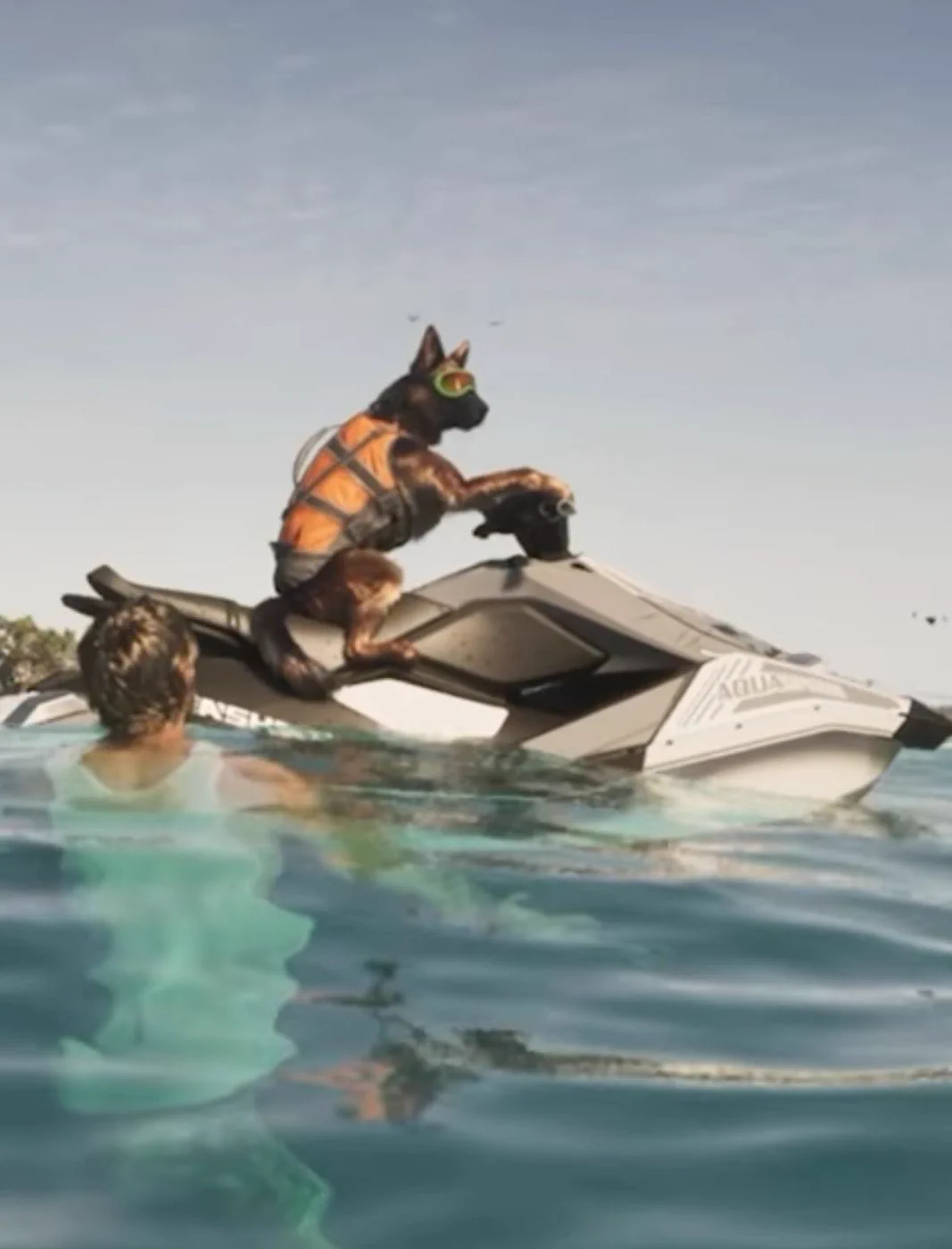
Radio Times describes finding the dog by becoming stranded in open water, away from boats and islands, then waiting roughly five minutes. Its suggested starting point is Gambit Bay, reachable from the dock at Jason’s initial home. Barking precedes the arrival of a dog driving a jet ski.
The guide calls him Cool Dog and reports a further visit to an island of dogs, including a fetch interaction and a buried cash reward. Treat the approximate wait as the reporter’s account, rather than a guaranteed countdown. The useful first objective is seeing the rescue itself.
A possible connection to a real Florida dog
The comparison extends beyond the game. NBC 6 South Florida has reported on Loosy, a Fort Lauderdale dog whose owner pulls her personal watercraft while riding a powered hoverboard. Fans have connected that local spectacle with GTA 6’s canine rider. The resemblance is suggestive; it is not a published confirmation of Rockstar’s inspiration.
There is an obvious comic difference between watching a pet enjoy a ride and having that pet take responsibility for rescuing you. The game’s version reverses the relationship. The player becomes the passenger, dependent on a creature that seems far better prepared for the situation.
That reversal explains much of the scene’s charm. An intimidating expanse of water becomes an unlikely act of hospitality. A life jacket and goggles give the absurdity just enough practical detail to work. The dog looks ready for a job nobody expected him to have.
Across Gambit Bay, the sound leads into the mangroves
For a different encounter, PC Gamer’s Skunk Ape guide points across Gambit Bay from Jason’s starting house, toward a peninsula with a dead-end road. The writer describes a Focus Mode prompt tied to noises, a brief pursuit and an unsettling object near a tree.
The same account advises watching for flyers after the sighting because they connect to a further mission. That gives the GTA 6 Skunk Ape a different rhythm from a passing visual gag. The initial encounter becomes an invitation to notice related material elsewhere.
Listen before treating it as a chase
The practical clue here is sound. If a prompt appears, read it before accelerating toward whatever moves. Following an audio cue calls for a different pace from chasing a vehicle. Vegetation can interrupt a clear view, and moving more slowly gives the scene time to establish what deserves attention.
The name also carries local context. The National Wildlife Federation describes the Skunk Ape as Florida’s version of Bigfoot, with the name referring to its alleged odour and primate appearance. This is folklore, rather than an established animal species. Using that regional identity gives Leonida’s creature a closer relationship to its setting than an anonymous forest monster would have.
Build a waterside detour around the landscape
These two discoveries suggest an enjoyable way to explore: give the shoreline some time between major objectives. Look outward from the beach, then look back toward paths, vegetation and small structures. Those perspectives reveal different kinds of detail, even when nothing unusual happens.
For the dog, the reported setup concerns distance from ordinary help. For the ape, the important cue comes from a nearby environment that conceals movement. One encounter uses emptiness; the other uses obstruction. Thinking about that difference is more useful than treating the entire coastline as a single search zone.
Players who prefer to preserve surprises can stop after learning the initial locations. The full island visit and the later creature mission are separate reasons to continue once an encounter begins. A discovery need not be consumed as a complete checklist before the first trip.
Why these animals linger in the memory
They also change the player’s position within a scene. During a rescue, the usual decision maker becomes somebody else’s responsibility. During a sighting, that same player becomes an observer trying to keep up. Neither role requires a long speech to make its point. Movement and distance communicate the relationship. The dog approaches; the creature retreats. Those opposite actions give two brief encounters very different emotional shapes.
Leonida’s waterside secrets change the player’s expectations without demanding a long explanation. A dog behaves like a capable local. A figure in the trees remains difficult to read. One asks for trust, the other for curiosity.
That is a useful kind of variety. The same bay can offer comedy and unease, depending on which direction the player turns. The landscape becomes memorable because something happened there, and because the next visit may carry a different expectation.