A new Grand Theft Auto game is never just another item on a release calendar. The GTA 6 cultural impact is visible in news coverage, workplace conversations and arguments about what modern entertainment should do. The more interesting question is why this particular series continues to occupy so much public space.
A rare shared moment in fragmented entertainment
Entertainment now arrives through countless subscriptions, platforms and personalised feeds. That makes it increasingly difficult for a single release to become a common reference point. GTA 6 has managed it. The launch is being discussed by people who may never hold a controller, alongside enthusiasts who have followed every trailer.
The interest is not only about record breaking sales predictions. Grand Theft Auto has become a language for talking about contemporary American life. Its fictional streets offer a distorted version of familiar news, consumer culture, celebrity behaviour and everyday anxieties.
Satire works because the details are recognisable
Vice City and Leonida draw on the landscapes and social contradictions associated with Florida. The setting can accommodate glamour and decay, wealth and desperation, ordinary routines and deliberate absurdity. Rockstar’s long standing method has been to exaggerate reality until its strangeness becomes difficult to separate from fiction.
The strongest satire does more than insert jokes into billboards. It emerges from the systems that shape a place: what people buy, what they fear and what they broadcast about themselves. Players may find that small scenes reveal as much about the game’s worldview as its most elaborate action sequence.
Two protagonists create a different lens
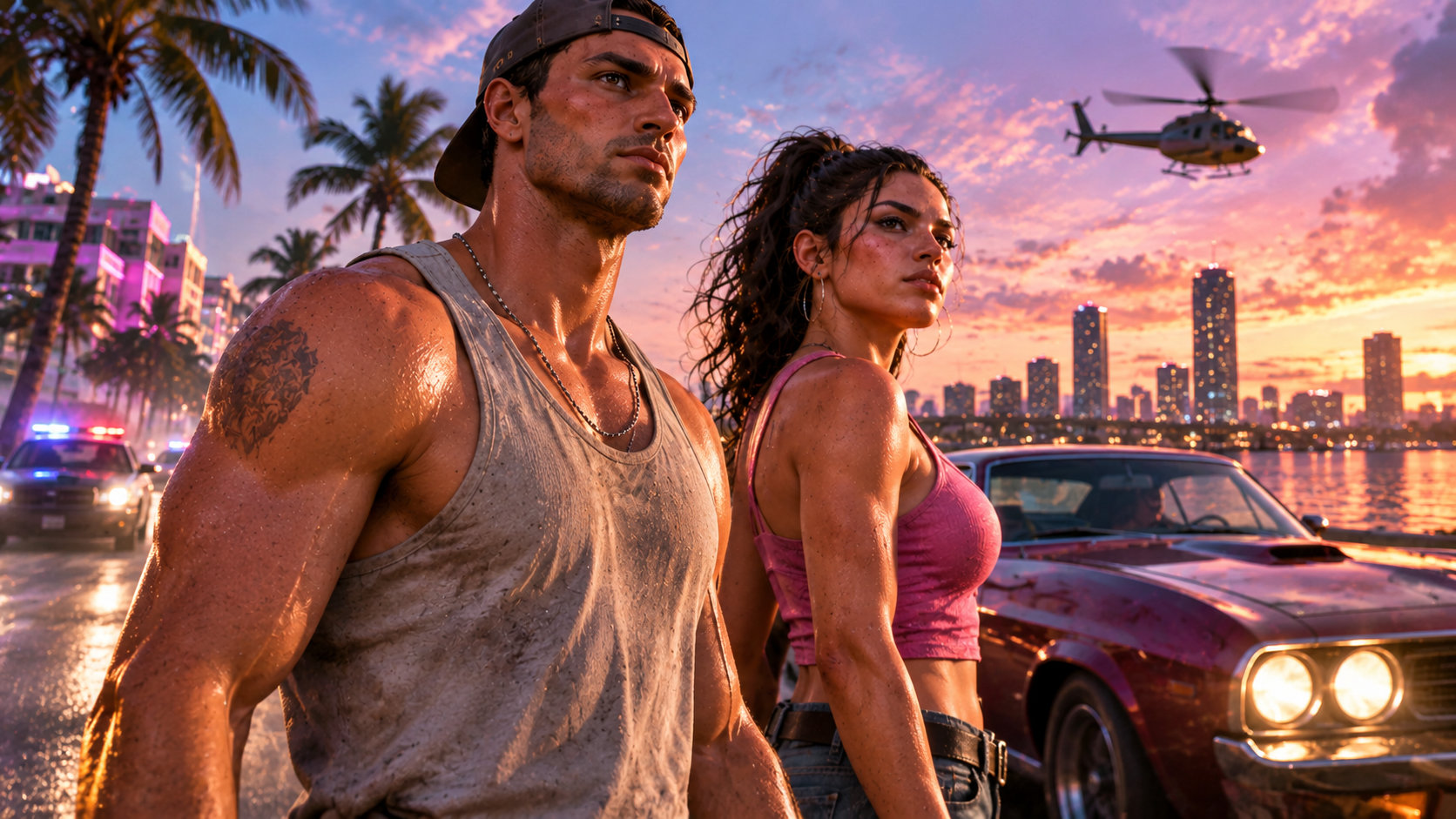
Jason and Lucia bring the story back to individuals within the spectacle. A criminal partnership creates questions about loyalty, vulnerability and the consequences of risky choices. Those concerns can offer a counterweight to the temptation to treat every civilian and object as a toy.
What to consider
Whether the writing succeeds depends on what the characters do when the action slows down. Grand Theft Auto has always mixed parody with moments of sincerity. A modern instalment needs both if it wants to be remembered for more than technical size.
Why nonplayers might still care
Games shape music discovery, online conversation, visual culture and even the language people use to describe real cities. An event on the scale of GTA 6 can influence how a generation sees interactive storytelling. It also opens old arguments about violence, age ratings and whether provocative entertainment has meaningful artistic ambitions.
Those debates deserve more than two fixed camps. The existence of mature material does not automatically make a work empty, and large budgets do not guarantee cultural depth. Critics should look closely at what the game actually asks its audience to think about.
Popularity is not the same as universal appeal
Some people dislike open world crime stories, long missions or the exaggerated tone of Grand Theft Auto. That does not make them culturally out of touch. Likewise, players who find genuine value in the experience need not defend it solely through sales figures and review scores.
The significant development is that interactive entertainment can now command attention on a scale once reserved for major films and sporting events. GTA 6 is worth discussing because it reveals how culture is changing, even for people who never intend to play it.
The difference between access and appreciation
A cultural event does not require universal participation. A person can understand why a game matters through its influence on design, humour, music or online conversation without spending time in its world. In the same way, a player can enjoy the driving and exploration without accepting every argument made for the game’s artistic importance. Grand Theft Auto’s provocations have often generated both serious criticism and lazy outrage. The most productive discussion starts with specific examples. It asks whether a joke has a target, whether a character has meaningful choices and whether the simulation adds something that film or television cannot easily reproduce.
The bigger picture
It is also worth remembering that a first impression can be correct about one part of a game and wrong about another. The better assessment is the one that makes room for both strengths and limitations.