GTA 6 may become the most expensive video game ever produced, with outside estimates placing Rockstar Games’ investment well above $1 billion and some calculations approaching $1.5 billion.
Rockstar has not publicly disclosed the official GTA 6 budget, so those numbers should not be treated as confirmed production costs. Even so, the scale of Grand Theft Auto VI makes an enormous development bill increasingly believable.
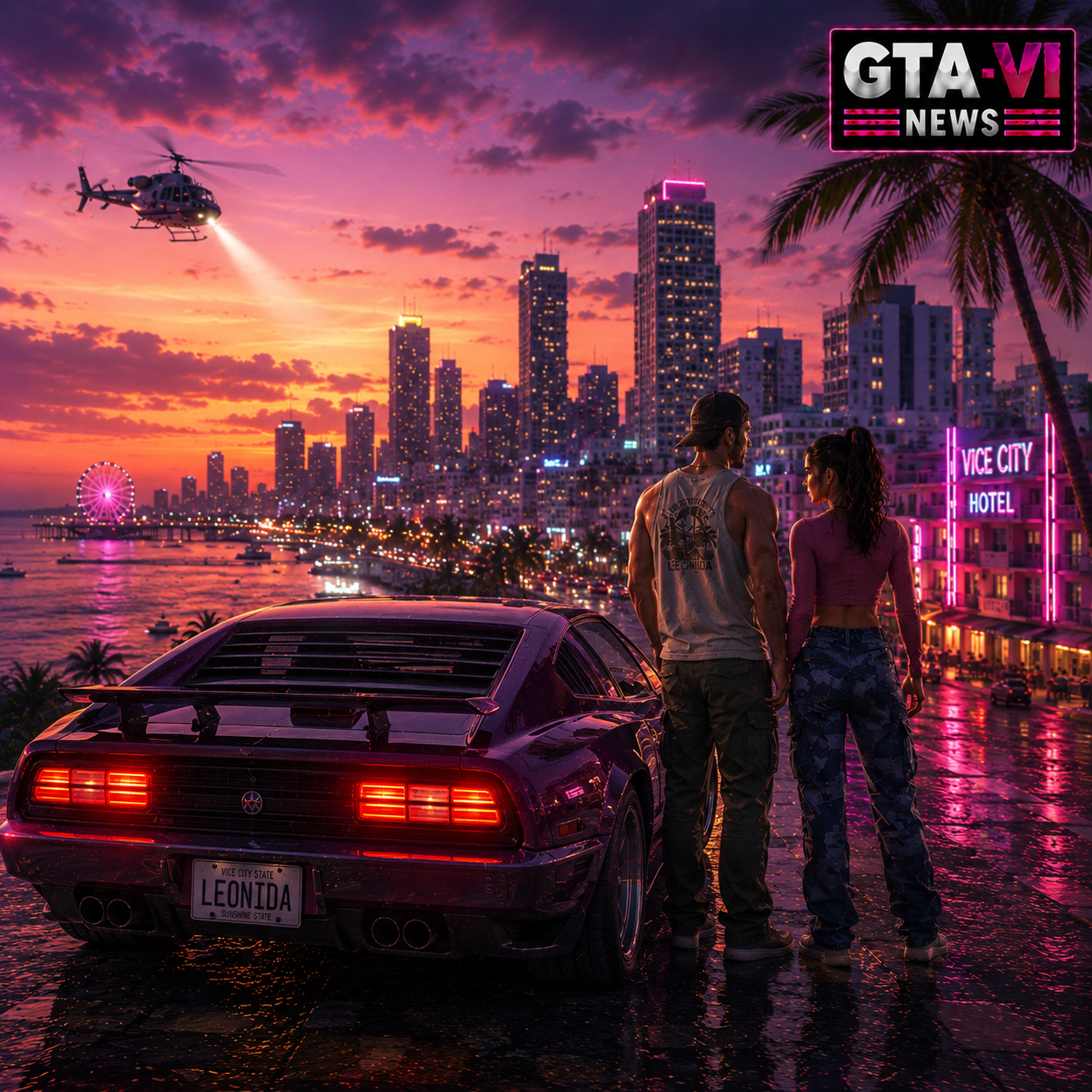
Rockstar has spent years building Leonida, creating hundreds of thousands of animations and developing a world significantly larger than GTA V. Add performance capture, programming, writing, music, quality assurance and global marketing, and the economics begin to look very different from those of an ordinary game.
GTA 6 is not simply competing with other games. Its reported cost places it alongside the largest entertainment productions ever attempted.
GTA 6 Budget Estimates Reach Around $1.5 Billion
Analysts have estimated that Rockstar’s total investment in Grand Theft Auto VI could exceed $1 billion, with some estimates putting the figure near $1.5 billion.
Again, this is not an official Rockstar number.
The company and parent Take-Two Interactive have not published a detailed development budget. It is also unclear whether higher estimates combine production, marketing and other long-term costs.
That distinction matters because development budgets can be calculated in different ways.
A game may have one figure representing the cost of building its launch version, while marketing, distribution and years of post-launch development add substantially more.
For GTA 6, the eventual online component could further complicate any attempt to calculate a definitive lifetime cost.
Nearly a Decade of Development Adds Up Quickly
One reason the rumored figure appears plausible is the project’s extraordinary production timeline.
Modern AAA games require enormous multidisciplinary teams. Programmers build underlying systems. Artists create environments and characters. Animators handle movement. Writers develop missions and dialogue, while actors provide performances.
Then comes testing.
A game the size of GTA 6 requires extensive quality assurance because its systems can interact in unpredictable ways. A vehicle, pedestrian, police encounter and mission script can all collide within the same open-world situation.
Rockstar has been developing GTA 6 across a period measured in years rather than months.
Paying large development teams throughout such a long production cycle creates costs that quickly reach hundreds of millions of dollars.
GTA 6 Reportedly Contains Around 600,000 Animations
The scale becomes clearer when looking at animation alone.
Rockstar North co-head Aaron Garbut has reportedly said GTA 6 contains around 600,000 animations.
For comparison, Red Dead Redemption 2 reportedly contained roughly half that amount, while GTA V used around 55,000 animations.
That is an extraordinary increase.
Animations are required for obvious actions such as walking, driving and combat, but Rockstar’s games also rely heavily on small contextual movements.
Characters enter different vehicles. NPCs react to events. Jason and Lucia interact with objects, change positions during conversations and respond to their surroundings.
Producing those movements requires animators, performance capture, technical implementation and extensive testing.
Fans may never consciously notice most of them. That is often the point. Natural movement works best when it does not draw attention to itself.
GTA 6’s World Is Much Larger Than Los Santos
The reported GTA 6 map size adds another layer to the cost.
Rockstar North leadership has indicated that Leonida is roughly twice the size of GTA V’s playable world. Vice City itself is reportedly around twice as large as Los Santos.
A larger map does not simply require more terrain.
Rockstar needs roads, buildings, businesses, vegetation, signs, vehicles, pedestrians and countless environmental assets to prevent the world from feeling empty.
The recent Extended Look demonstrated how densely populated many of those locations are.
Beaches contain crowds. Streets are filled with traffic. Nightlife venues feature numerous individually animated NPCs.
Every layer requires development resources.
GTA 6 Is Also More Technically Complex
Rockstar is not achieving its larger world by simply reproducing GTA V technology across a bigger map.
GTA 6 features advanced lighting, detailed reflections, improved character rendering and substantially more reactive NPC systems.
Rockstar says it has expanded ideas developed for Red Dead Redemption 2, allowing characters to react more dynamically to Jason, Lucia and player behavior.
Police also appear capable of tracking more information about suspects, while familiar actions such as stealing vehicles now contain additional choices.
These systems require engineering and testing, not just artwork.
Other Major Games Already Cost Hundreds of Millions
GTA 6’s estimated budget sounds extraordinary until it is compared with the direction of modern AAA development.
Court documents previously revealed development costs of approximately $212 million for Horizon Forbidden West and $220 million for The Last of Us Part II.
More recent disclosures indicated that Call of Duty: Black Ops Cold War accumulated more than $700 million in development costs across its life cycle.
That figure included continued support, which makes a direct comparison with GTA 6 difficult.
Still, it demonstrates how dramatically the economics of major games have changed.
Large releases are no longer automatically $50 million or $100 million projects. Some now require investments comparable to major film franchises.
Star Citizen Has Also Crossed the Billion-Dollar Mark
Another game frequently mentioned in discussions about extreme development costs is Star Citizen.
The long-running space project has raised more than $1 billion through crowdfunding and sales, although its circumstances are fundamentally different from GTA 6.
Star Citizen has remained in development since 2011 and continues operating as an evolving playable project rather than a conventional finished release.
Its single-player counterpart, Squadron 42, has also experienced a lengthy production process.
For that reason, comparing total money raised by Star Citizen with Rockstar’s estimated GTA 6 production spending is not straightforward.
Both projects do demonstrate one thing: modern game development can operate at financial scales once associated almost exclusively with major film studios.
Rockstar Has a Strong Reason to Spend So Much
Take-Two’s willingness to fund GTA 6 becomes easier to understand when looking at the franchise’s earning potential.
GTA V generated around $800 million during its first day on sale in 2013. Over its extraordinary lifetime, the game and its surrounding ecosystem have generated billions.
GTA Online changed the financial equation further.
Instead of earning revenue only when someone purchased GTA V, Rockstar created an online platform capable of generating income for more than a decade through virtual currency and GTA+ memberships.
The next Grand Theft Auto could follow a similarly long life cycle.
If GTA 6 remains commercially relevant for another decade, a billion-dollar investment becomes less difficult to justify.
Bigger Budgets Also Create Bigger Risks
There is another side to the numbers.
As development budgets rise, publishers become less able to tolerate commercial failure. A project costing hundreds of millions of dollars needs an enormous audience simply to justify the investment.
Long development cycles can also create difficult working conditions.
Rockstar faced significant criticism surrounding crunch during Red Dead Redemption 2’s development, including reports of exceptionally long working weeks. The wider industry has faced similar criticism as studios chase increasingly detailed games.
More animations, larger maps and better graphics are impressive.
They are not free.
GTA 6 Could Redefine What a Blockbuster Game Costs
Whether GTA 6 ultimately cost $1 billion, $1.5 billion or something significantly different will remain uncertain unless Rockstar or Take-Two releases official figures.
What is already clear is the scale of the production.
Rockstar has built an enormous version of Leonida, reportedly created hundreds of thousands of animations and spent years developing systems intended to remain relevant long after launch.
The investment is enormous because the expectations are equally large.
GTA V became one of the most commercially successful entertainment products ever released. Its successor is expected to do more than sell well during launch week.
Rockstar is building GTA 6 to last.
If the billion-dollar estimates eventually prove accurate, the most remarkable question may not be how Rockstar spent that much money.
It will be how quickly Grand Theft Auto VI earns it back.