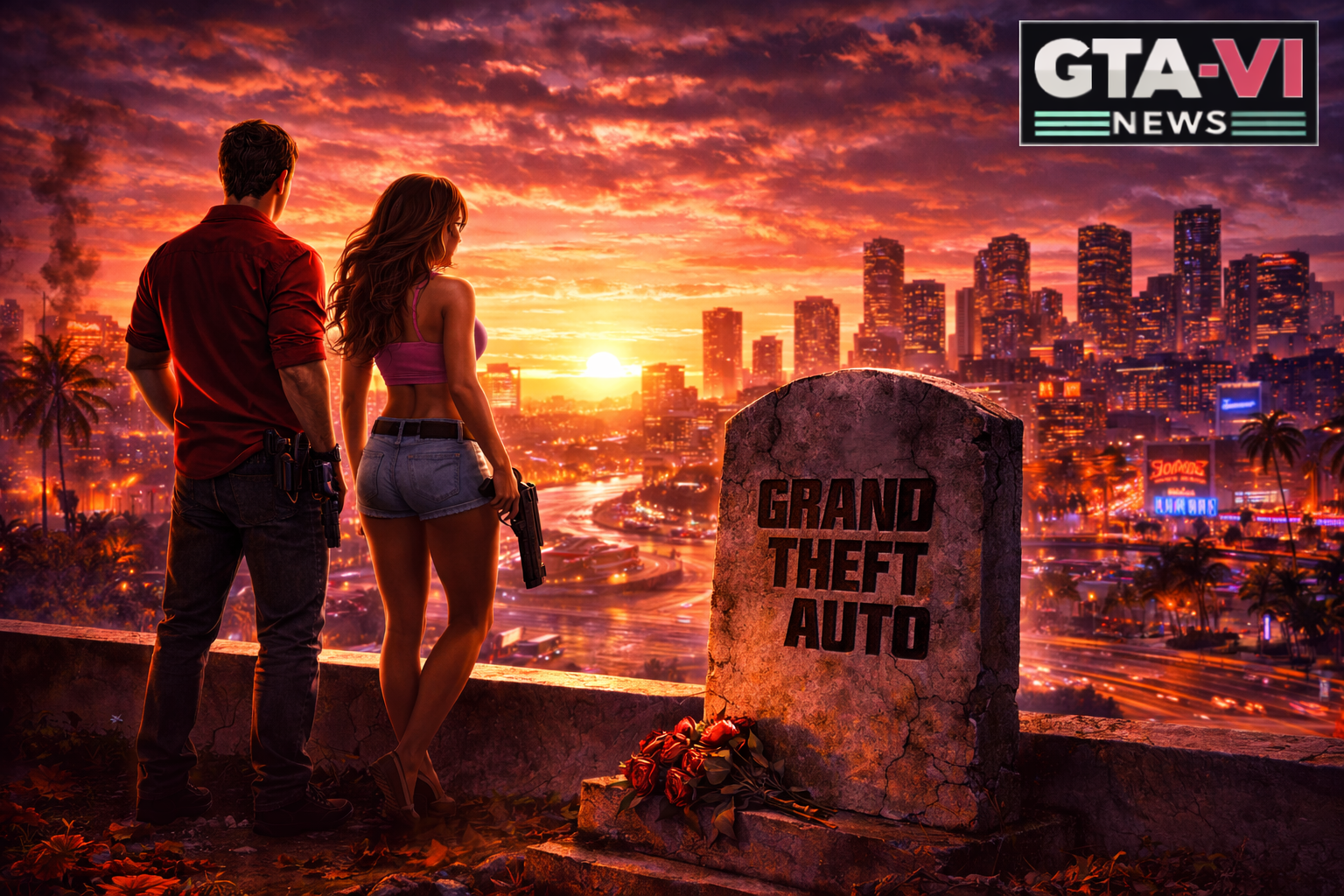
The debate has intensified as anticipation for GTA 6 reaches unprecedented levels. After more than a decade of dominance by GTA 5, many fans and analysts are asking a bold question: should Grand Theft Auto VI be the last numbered entry in the franchise?
It sounds radical. Yet the idea is gaining traction. Not because the series is declining, but because it may be peaking.
The Weight of a Cultural Phenomenon
Few franchises in entertainment can rival the cultural reach of Grand Theft Auto. Since Rockstar Games launched GTA III in 2001, the series has redefined open-world design. Each major release pushed technical boundaries while shaping conversations around freedom, satire, and digital storytelling.
GTA 5 became a generational landmark. It sold more than 190 million copies and evolved into a persistent platform through GTA Online. That success changed expectations. A new installment is no longer just a sequel. It is an event.
This is precisely why some believe GTA 6 should close the numbered saga. Ending at a creative and commercial high point is rare in gaming. Doing so deliberately would be even rarer.
A Decade in the Making
Development cycles have grown longer and more complex. Modern blockbuster games require thousands of developers, massive budgets, and years of refinement. Reports suggest that Grand Theft Auto VI is one of the most expensive games ever produced.
The industry has changed since 2013. Player expectations are higher. Competition is global. Live-service ecosystems dominate revenue models. Rockstar is no longer competing solely with other crime simulators. It is competing with entire entertainment platforms.
Under these conditions, producing a GTA 7 in another ten or fifteen years may not be realistic. Creative burnout is a factor. Escalating budgets are another. Sometimes the smartest move is restraint.
The Case for a Definitive Finale
Ending a franchise does not mean abandoning its universe. In contrast, it can signal evolution.
If GTA 6 delivers a living, expanding world with long-term support, Rockstar could maintain the brand without releasing traditional sequels. Continuous expansions, narrative updates, and evolving cities could replace the cycle of numbered releases.
Fans may be surprised that this model already mirrors industry trends. Major titles now function as platforms rather than standalone entries. A single, definitive version of Grand Theft Auto could evolve for years without the pressure of surpassing itself every decade.
This changes everything.
Creative Closure Has Power
There is also artistic value in knowing when to conclude a story.
Franchises often fade because they continue past their creative peak. Repetition creeps in. Innovation slows. Cultural relevance fades. By positioning Grand Theft Auto VI as a final chapter, Rockstar could craft a deliberate, cohesive statement rather than an open-ended promise of more.
Moreover, closure creates legacy. A carefully framed ending strengthens the mythology of a series. It invites reflection. It preserves prestige.
Consider how rare it is for major franchises to end on their own terms. In gaming, success typically demands continuation. Choosing finality would signal confidence rather than retreat.
However, the Business Reality Is Complicated
Of course, the counterargument is obvious. Grand Theft Auto is one of the most profitable brands in entertainment history. From a business perspective, ending the series seems improbable.
GTA Online continues to generate substantial revenue. The broader Rockstar Games ecosystem thrives on long-term engagement. Shareholders and parent company expectations inevitably influence strategy.
Yet ending the numbered sequence does not eliminate profitability. Rockstar could pivot to spin-offs, new intellectual properties, or entirely different genres. The studio has already demonstrated range with Red Dead Redemption. Creative reinvention might be healthier than endless iteration.
A Generational Shift in Open Worlds
Another factor to consider is technological saturation. Open-world design has matured dramatically. Dynamic weather systems, AI-driven NPC behavior, and photorealistic cityscapes are becoming standard features.
If GTA 6 fully realizes the promise of a reactive, deeply immersive world, it may set a benchmark that feels definitive. Future entries would need to deliver not incremental upgrades, but transformative leaps.
That bar is difficult to raise indefinitely.
What Players Truly Want
Ultimately, the future of Grand Theft Auto depends on player expectations. Many fans simply want a living world that evolves. They want meaningful updates, fresh stories, and technological innovation. They do not necessarily demand a new numbered title every decade.
Moreover, the gaming audience is maturing. Nostalgia plays a role, but so does a desire for quality over quantity. If GTA 6 arrives as a refined, expansive experience that continues to grow, it may satisfy that appetite without the need for a sequel.
A Bold Yet Plausible Future
Should GTA 6 be the final chapter? From a creative standpoint, the argument has merit. Ending on a high note preserves integrity. It avoids diminishing returns. It repositions the brand as a platform rather than a perpetual sequel machine.
From a business perspective, the situation is less clear. The franchise’s profitability makes permanent closure unlikely. However, redefining what “final” means could offer a compromise.
In the end, the discussion reflects the extraordinary weight carried by Grand Theft Auto VI. Few games face expectations this immense. Whether it becomes the final numbered installment or simply the next milestone, one thing is certain: its release will mark a turning point.
For Rockstar, that decision will shape not only the future of GTA, but the direction of modern open-world gaming itself.