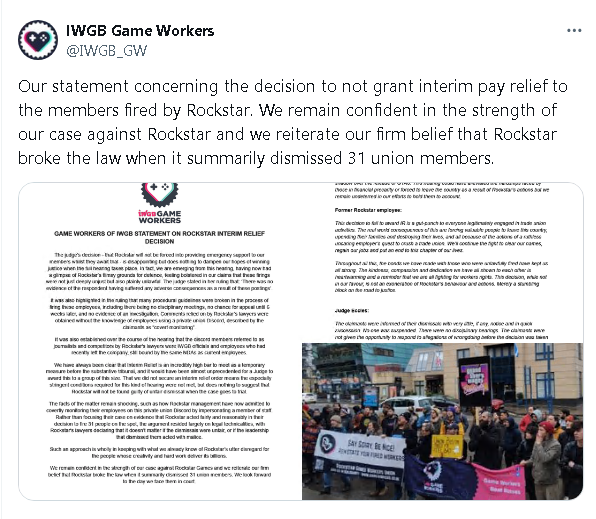
The long and often chaotic development of GTA 6 has entered another uncomfortable phase. Reports that Rockstar Games has dismissed three developers in connection with recent leaks have sparked renewed scrutiny, not only of the studio’s security practices, but also of its internal culture. What began as another chapter in the endless leak cycle has now intersected with a broader legal and labor dispute, raising questions that go beyond spoilers and screenshots.
For a company that has spent decades guarding its projects with near obsession, the alleged firings feel both familiar and revealing. Rockstar has always acted swiftly when confidentiality is breached. However, the context surrounding these dismissals makes this episode different. The studio is already navigating legal pressure related to workplace conditions, and the timing has made it impossible to separate the leak response from the larger story unfolding behind the scenes.
What is known about the reported firings
According to reporting, three developers working on Grand Theft Auto VI were terminated following an internal investigation into unauthorized information sharing. The studio has not publicly confirmed the identities of those involved, nor has it detailed the specific material that allegedly triggered the action.
That silence is typical. Rockstar rarely comments on internal discipline. Yet industry observers note that dismissing multiple staff members at once suggests the studio viewed the situation as serious. Leaks are not new to Rockstar, but recent disclosures have been unusually detailed, covering systems, locations, and mechanics that align closely with the company’s known design ambitions.
Fans may be surprised that the firings themselves are now being treated as indirect validation of certain leaks. Studios do not usually escalate to termination over vague speculation. Even so, confirmation of authenticity remains elusive. What is clear is that Rockstar believed the breach warranted decisive action.
The leak problem Rockstar cannot seem to escape
Leaks have followed GTA 6 since its earliest days, culminating in the massive footage breach that shook the industry in 2022. Since then, every new rumor has been measured against that precedent. Some were dismissed as opportunistic fabrications. Others lingered because they fit too neatly with Rockstar’s design history.
The latest wave of leaks revived discussions around core features, including an evolving wanted system, deeper dual protagonist mechanics, and a denser open world. While none of these ideas are shocking on their own, their consistency across multiple sources has kept them alive. The reported firings have added another layer. They do not confirm features, but they suggest the information trail led somewhere uncomfortably real.
However, leaks rarely tell the full story. Development plans shift constantly. Features are cut, merged, or reworked. What leaks capture is a moment in time, not a finished product. Rockstar knows this. It also knows how quickly partial truths harden into expectations.
How the union lawsuit changes the context
The firings have landed amid an escalating legal dispute involving workplace practices at Rockstar. While the lawsuit itself is separate from the leak investigation, the overlap in timing has drawn attention. Critics argue that disciplinary actions, even if justified, now risk being viewed through a different lens.
Labor advocates have pointed out that high pressure environments, long development cycles, and strict secrecy can create tension between management and staff. In that climate, leaks are often symptoms rather than causes. Rockstar has previously acknowledged the strain of large scale development, particularly during crunch heavy periods.
In contrast, defenders of the studio emphasize the necessity of confidentiality. A project as significant as GTA 6 represents billions in potential revenue. From that perspective, leaks threaten not only marketing plans, but also the safety and job security of the broader team.
Industry reaction and quiet concern
Within the games industry, the reaction has been measured. Few studios want to publicly criticize Rockstar, a company whose success defines market expectations. Privately, however, there is concern about precedent. Terminations linked to leaks can send a chilling message, especially during an era when workers are increasingly vocal about conditions and rights.
At the same time, many developers acknowledge the unique pressure surrounding GTA 6. No other unreleased game carries the same weight. Every internal mistake becomes public spectacle. Every rumor is amplified. In that environment, tolerance for breaches narrows.
What this means for GTA 6 itself
From a player perspective, the immediate impact on the game is likely minimal. Large teams absorb personnel changes regularly. The more lasting effect is cultural. Trust between management and developers is harder to rebuild once strained, and that can influence morale during the final stretch of production.
There is also the question of messaging. Rockstar’s strategy of silence has worked before, but expectations around transparency are changing. Each unanswered report invites interpretation. Each leak shapes perception. The firings have not stopped speculation. If anything, they have sharpened it.
This changes everything. Not because the game itself is at risk, but because the conversation around it has shifted. GTA 6 is no longer just a story about ambition and scale. It is also about labor, secrecy, and the cost of building the most anticipated game of its generation.
A fragile balance
Rockstar now faces a delicate task. It must protect its work without alienating its workforce. It must maintain mystery without allowing rumors to define the narrative. The reported firings underscore how thin that line has become.
Until Rockstar speaks directly, these events will remain open to interpretation. What is certain is that GTA 6 exists in an environment unlike any the studio has faced before. Every internal decision echoes outward. Every response, or lack of one, becomes part of the story.
When the game finally launches, it will be judged on its quality. Long before that, however, it is being judged on how it is made.