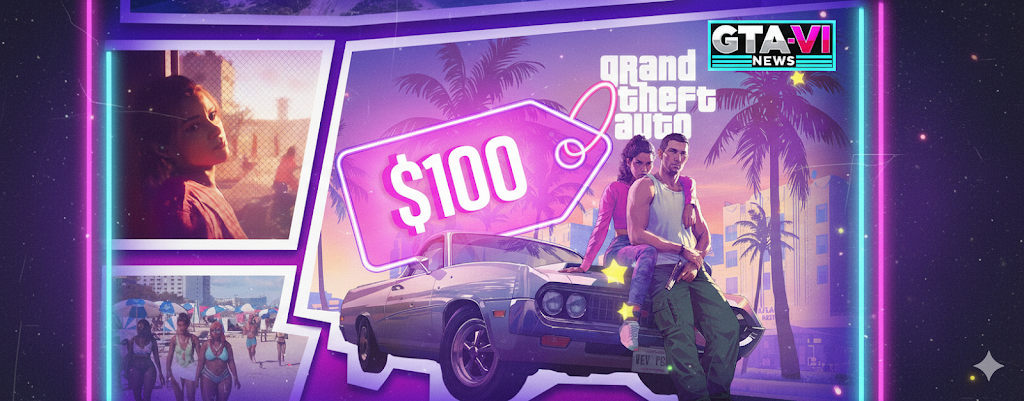
The expected arrival of GTA 6 is already reshaping release calendars and marketing strategies. Another question now sits at the center of industry debate: price. Not special editions. Not collector bundles. The base price.
For years, the standard launch price for major console titles held steady. Then the current generation pushed many publishers to move from 60 dollars to 70. That shift met resistance at first, yet most top tier releases now sit comfortably at that level. With Grand Theft Auto 6, however, some analysts believe Rockstar and its parent company could go further.
That idea is not as unrealistic as it first sounds. Still, there are limits. Even for a franchise of this scale.
The New Economics of AAA Development
Large scale games cost more to build than they did a decade ago. Team sizes expanded. Production timelines stretched. Performance capture, world simulation, and online infrastructure added new layers of expense. Marketing budgets also grew, often rivaling film campaigns.
Rockstar Games is known for extended development cycles and dense open worlds. Reports and industry estimates have repeatedly suggested that GTA 6 sits among the most expensive entertainment projects ever produced. While exact figures remain confidential, the direction is clear. Costs are up.
Publishers respond to rising costs in several ways. They expand post launch monetization. They sell premium editions. They increase base prices when the market allows it. The 70 dollar shift already proved that pricing can move when platform holders and major publishers align.
The open question is whether the next step happens with a title as dominant as GTA 6.
Why GTA 6 Has Unique Pricing Power
Not every franchise can test price ceilings. Grand Theft Auto can. The series has a long record of commercial success across multiple hardware generations. GTA 5 continues to sell years after release and remains active through its online mode. Brand recognition is global. Audience size is massive.
Fans may be surprised how much that matters for pricing strategy. A publisher will not experiment with higher entry prices on a fragile property. It will consider it for a cultural heavyweight. If any single game could introduce a higher standard base price, this would be the candidate.
That does not mean it will happen. It means the conversation is credible.
The Case for a Higher Base Price
Supporters of a higher launch price for GTA 6 point to value hours. Rockstar titles typically deliver long campaigns plus extensive side content. Many players spend dozens or even hundreds of hours in these worlds. Compared with shorter experiences, the cost per hour can look favorable even at a higher entry fee.
There is also market precedent for premium pricing in other media. Big budget films, streaming subscriptions, and live events have all raised prices in recent years. Interactive entertainment has moved more slowly. Some executives argue that games still underprice their top tier releases relative to engagement time.
From that perspective, an 80 dollar or even 90 dollar standard edition does not look impossible. It looks like a test.
The Risks Rockstar Cannot Ignore
Higher pricing is not only a revenue decision. It is a perception decision. Players accept increases when they feel gradual and justified. Sharp jumps create backlash, even when demand remains strong. Social sentiment can shape early coverage and influence fence sitting buyers.
Moreover, retail ecosystems remain sensitive to thresholds. Gift card values, platform wallet balances, and regional pricing structures are often built around familiar tiers. Moving beyond them introduces friction. Friction slows impulse purchases.
There is also the competitive angle. Even if GTA 6 could command a higher price, other publishers might hold at 70 to position their titles as better value. That contrast could shape consumer psychology during crowded release periods.
Special Editions Already Capture Premium Spend
Another practical factor is edition layering. Modern blockbusters rarely rely on a single version. Deluxe and ultimate editions often cost far more than the base game and include early access, bonus content, or online currency. Enthusiasts routinely choose them.
This system already extracts higher spending from the most engaged segment of the audience without raising the entry barrier for everyone else. From a revenue design standpoint, it is efficient. Rockstar may decide there is little reason to disrupt that structure by lifting the base price too far.
In other words, the premium tier already exists. It just sits above the standard edition instead of replacing it.
Platform Holders Also Influence the Final Number
Pricing does not happen in isolation. Console storefronts, platform policies, and regional conversion frameworks all play roles. A major shift in base pricing usually involves coordination with platform holders. When the move to 70 dollars occurred, it did not happen randomly across scattered titles. It arrived in waves.
If GTA 6 launches at a higher base price, it will likely reflect broader platform level acceptance, not a solo experiment. That kind of alignment reduces confusion and normalizes expectations.
Without that alignment, the safer path remains the current top tier standard.
What Is the Most Realistic Outcome?
The most plausible scenario sits between caution and ambition. A 70 dollar standard edition remains the safest prediction. Expanded premium editions will almost certainly climb higher, capturing additional revenue from dedicated players. A modest base increase above 70 is possible, but not guaranteed.
Rockstar understands momentum. The launch of GTA 6 is not only about margin per copy. It is about scale of adoption, online population, and long term ecosystem revenue. A slightly lower barrier at entry can produce larger downstream returns.
Price matters. Reach matters more.