The Franchise Built on Pushing Limits
Few entertainment brands have shaped pop culture like Grand Theft Auto. Since the late nineties, Rockstar Games has built a legacy on satire, open-world freedom, and unapologetically bold storytelling. Every new release has invited the same mix of admiration and controversy. Yet the conversation surrounding GTA 6 looks different. It isn’t just about violence or explicit themes. Today’s debates are rooted in technology, and concern how the game may be shaped by artificial intelligence and modern platform rules.
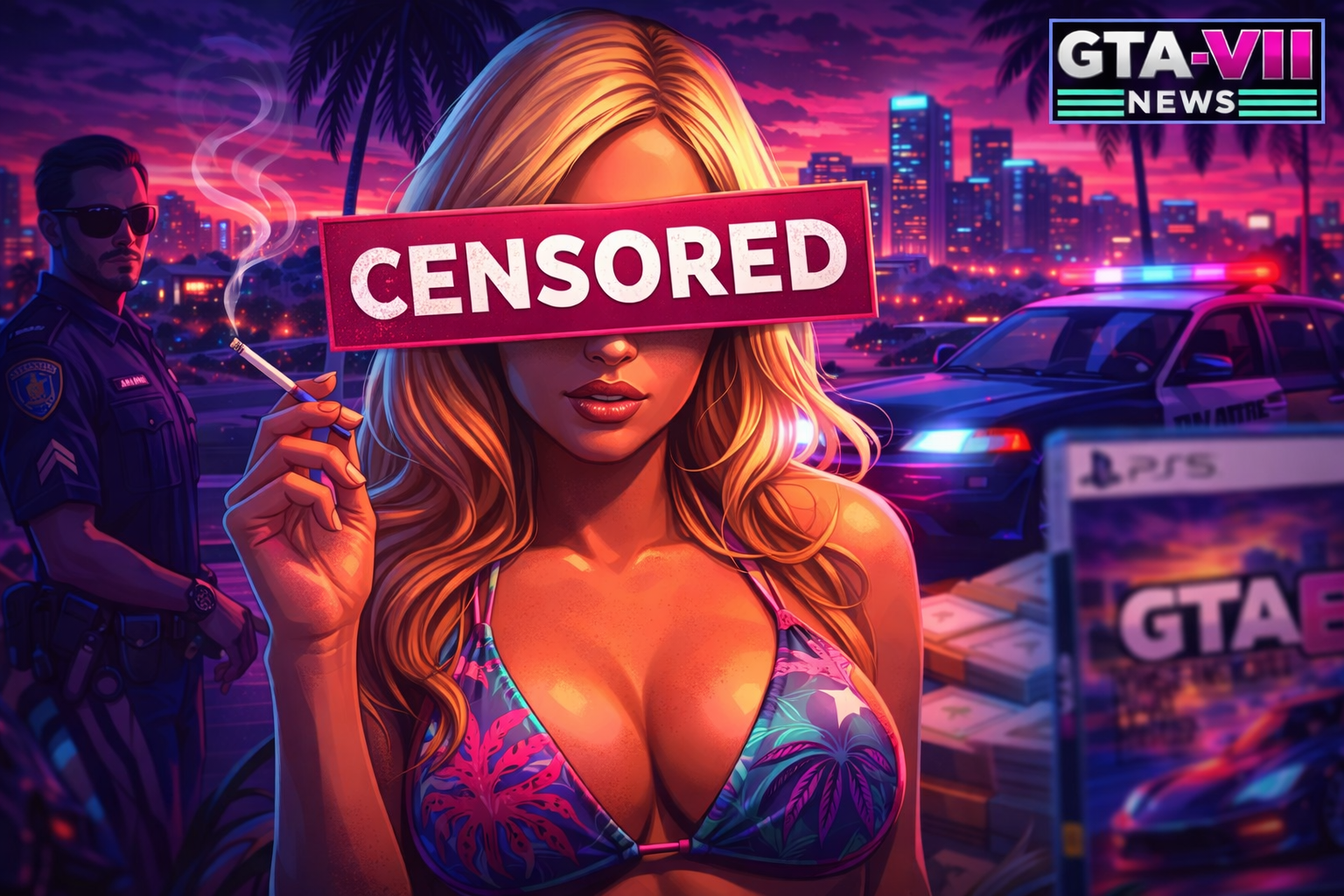
That shift matters. Fans recognise that the world around the franchise is not the same world that welcomed previous entries. Public expectations for media, workplace behaviour, and digital safety have changed. Console manufacturers, including Sony and Microsoft, now enforce stricter guidelines on language, character interactions, and player communication. It has left some gamers wondering whether GTA 6 will be able to express itself with the same edge as its predecessors—or if new tools and policies will soften the experience.
Why AI Matters in the First Place
The topic surfaced because players expect artificial intelligence to play a bigger role in GTA 6 than in any earlier Rockstar title. The idea isn’t speculation without reason. Open-world games rely on NPC logic, dynamic systems, and changing responses to unpredictability. Rockstar has long been regarded as one of the industry’s most ambitious studios in that space. If GTA 6 introduces advanced AI-driven behaviour, dialogue systems, or voice generation, questions inevitably follow.
Who controls the output? How authentic will characters feel? Will consoles block dialogue that violates guidelines? Could voice generation lead to regulation?
These concerns are not abstract. Similar debates have already taken place in online shooters, MMOs, and VR platforms where AI moderation monitors player speech. Gamers fear that if technology becomes too restrictive, GTA 6 may lose the personality that makes it unique.
Platform Rules Have Never Been Tighter
Modern console policies play a central role in that discussion. Sony and Microsoft now operate within stricter global regulations designed to minimise harassment, discrimination, and explicit material especially in connected environments. The industry’s shift is not limited to multiplayer spaces. Single-player games are increasingly shaped by internal review processes intended to prevent future backlash. Fans worry that GTA 6, a franchise famous for satire and shock, may face additional scrutiny.
Some critics point out that Rockstar’s writing often pushes boundaries that would raise concern today. Political humour, criminal activity, adult themes, and social commentary are core to the series’ identity. If those elements are toned down, even subtly, the result could feel unfamiliar to long-time players.
Fans Divided Over What They Want
The community’s reaction is split. Some welcome more oversight, arguing that modernisation will help GTA 6 connect with a broader audience. Others fear the series could be reshaped into something safer still impressive, but less daring.
Anxiety intensified after the recent trailer revealed characters with more emotional range, a more grounded tone, and a narrative driven by relationships rather than chaos. Many praised the evolution. Others questioned whether this direction signalled a cultural shift away from the wild unpredictability that once defined Vice City.
One comment circulating online summed it up: “I don’t want a censored version of GTA. I want a smarter version of GTA.”
The AI Question: Enhancement or Restriction?
At the centre of the debate is a contradiction. Advanced AI could easily make GTA 6 feel richer, more alive, and more responsive. Imagine dynamic conversations with bystanders, shifting social environments, and a world that evolves based on the player’s behaviour. Those ideas excite the community.
Yet the same tools could enable active monitoring. In an age where games are connected to cloud platforms, user behaviour could theoretically be flagged, filtered, or recorded in real time. Fans are not claiming that GTA 6 will implement such systems. They are acknowledging that this era makes the conversation impossible to ignore.
Will Rockstar Compromise?
Rockstar has repeatedly emphasised creative freedom. Its projects have never aligned with cautious design. The studio’s reputation is built on confidence sometimes to a fault. For many players, that alone is reassurance. They believe GTA 6 will push expectations rather than shrink beneath them.
However, Rockstar also operates within a massive corporate environment. Take-Two Interactive must balance growth, profit, and public image. Last year, Take-Two leadership acknowledged that future games would be shaped with “long-term brand positioning” in mind. That comment, combined with a new industry landscape, makes the question even more relevant.
Why This Debate Reflects Something Bigger
Ultimately, the concern goes beyond censorship and beyond artificial intelligence. Players want confidence that Grand Theft Auto is still allowed to disrupt. They want bold storytelling, unpredictable mechanics, and an unapologetic tone. They fear that cultural pressure could influence artistic direction not because Rockstar lacks talent, but because entertainment franchises today exist inside stricter boundaries.
This tension highlights a larger truth: the gaming audience expects authenticity in a world moving increasingly toward regulation. And GTA 6 sits at that crossroads more visibly than any other major release.
A Turning Point in Modern Game Culture
The open question is not whether Rockstar has the skill to deliver something spectacular. It is whether the industry environment surrounding that delivery will allow the game to reflect its past. Fans do not simply want a polished blockbuster. They want identity.
GTA 6 may become the title that defines how far modern entertainment can stretch inside today’s cultural climate. If it succeeds without compromise, it could shape creative confidence across the industry. If it feels restricted, the impact may be equally significant. Either way, it marks a moment where a franchise built on provocation meets an era built on accountability.
This time, the debate matters as much as the game itself.