Editorial note: Rockstar Games has officially released Trailer 2 for Grand Theft Auto VI and says the game is set to launch on November 19, 2026 for PlayStation 5 and Xbox Series X|S. At the time of writing, Rockstar has not announced a native iPhone or Android edition. That matters because much of the wider GTA 6 mobile gaming conversation is driven by demand rather than confirmed platform plans.
Mobile is now part of everyday gaming culture
For years, players treated mobile as a side screen. That is no longer true. Phones now sit at the center of everyday gaming habits, from quick multiplayer sessions to full cloud streams on trains, sofas, and lunch breaks. That is why the idea of GTA 6 mobile gaming keeps resurfacing, even when the official launch remains focused on consoles.
Search traffic around GTA 6 on mobile is not hard to understand. People want the biggest game of the generation available on the device they already carry all day. The logic feels simple. The reality is not.
Fans may be surprised that the mobile question is less about desire and more about design math. A game built for vast city density, fast driving, simulation systems, and modern rendering does not simply shrink onto a phone because the market wants it to.
That expectation has changed the conversation around major releases. A blockbuster is no longer judged only by how it looks on a large television. It is also judged by how flexibly it fits real life. Can it be streamed? Can progress be checked remotely? Can social tools travel with the player?
Rockstar’s audience no longer plays on one device
This is where mobile gaming stops being a niche side topic and becomes part of the main editorial story. Accessibility is not only about price. It is also about where, when, and how a game can be experienced.
A huge open-world game does not stress a system in one neat way. It hits CPU scheduling, memory bandwidth, storage speed, asset streaming, thermal management, and control responsiveness all at once. On a phone, each of those constraints becomes more visible after ten or twenty minutes.
On pure hardware terms, phones have improved dramatically. Flagship chipsets are faster than many people realize, and mobile GPUs have narrowed some of the gap in burst performance. However, burst figures rarely tell the whole story. Heat, battery limits, and sustained load are what expose the real ceiling.
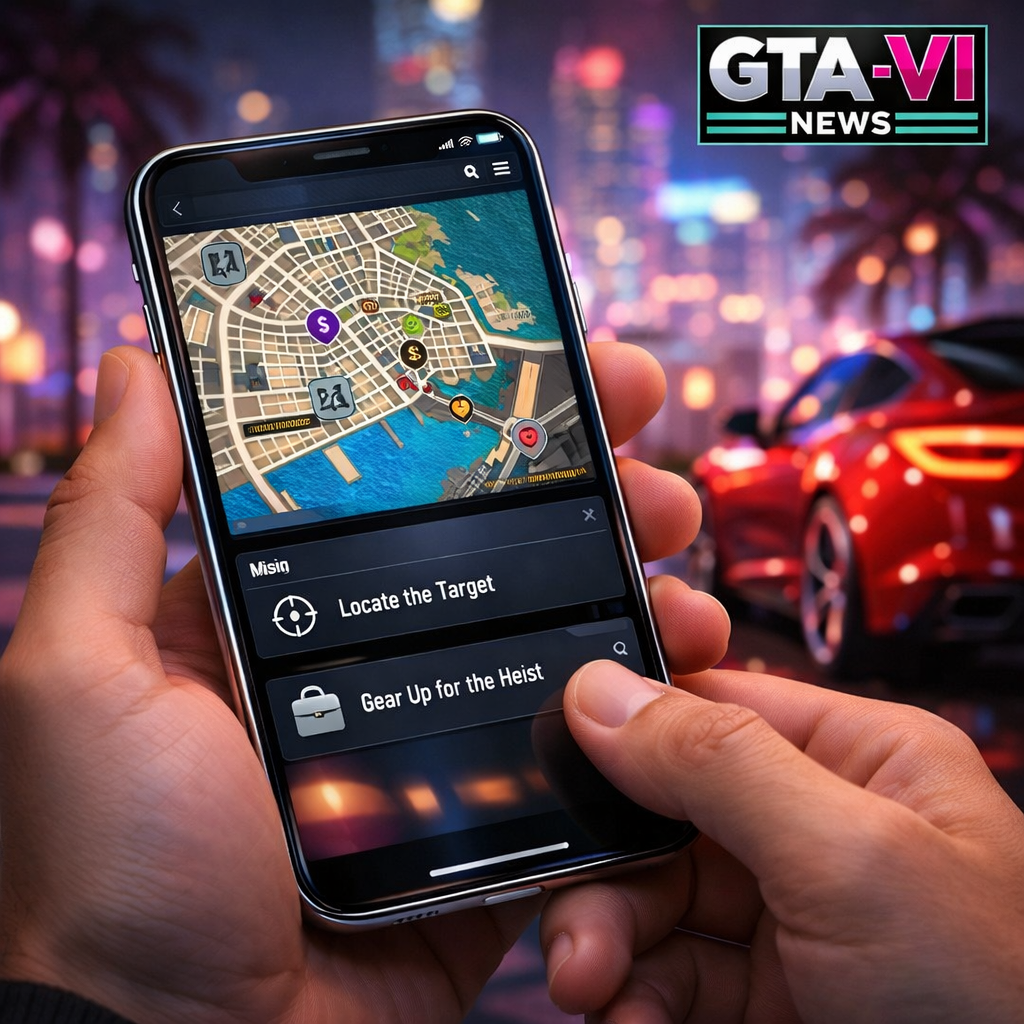
This is why the phrase GTA 6 mobile needs context. A native version, a streamed version, a remote-play session, and a lightweight companion tool are all different products with different expectations. Too many discussions merge them into one idea and then pretend the answer is obvious.
Short-session habits are changing expectations
Players often accept touch controls in games that are built around touch from day one. They are less forgiving when a console-style experience is squeezed into the same space. In practice, that means any serious GTA 6 mobile gaming solution would need excellent controller support, smart interface scaling, and careful tuning for short sessions.
Even then, comfort matters. A game can technically run and still feel inconvenient. That distinction matters more than marketing copy usually admits.
Cloud gaming changes the debate because it shifts most heavy rendering away from the phone. In theory, that makes GTA 6 on a phone far more plausible. In practice, the trade-off moves elsewhere, especially to latency, bandwidth quality, compression artifacts, and data use.
Remote play offers a related but slightly different path. If a player already owns the console hardware, using a phone as a secondary screen can make sense for convenience. However, that convenience still depends on network strength and controller setup. It is not magic. It is a compromise.
What this means for future GTA access models
From Rockstar’s point of view, platform choices are rarely casual. The studio protects scarcity, timing, and presentation with unusual discipline. That makes a rushed mobile launch unlikely. A premium brand benefits from arriving where it can control quality and first impressions.
There is also a strategic question. A direct phone version could expand reach, but it could also create technical scrutiny that distracts from the core launch. By contrast, a companion app, remote-play optimization, or later cloud partnerships would widen access without forcing the studio to redesign the entire game around mobile constraints.
This changes everything for readers trying to stay informed. The sensible approach is not cynicism. It is discipline. Separate official platform announcements from wishful thinking, and the conversation becomes much clearer.
A useful rule is simple: if a claim about mobile availability does not trace back to Rockstar or a clearly attributable corporate statement, it should be treated with caution. Hype spreads faster than verification. That is especially true with a game this visible.
Editorial perspective
So the mobile future around Grand Theft Auto VI is likely to be shaped by access models first and native ambition second. That may disappoint some fans in the short term. It is still the most credible reading of the market today.
The strongest conclusion is also the least dramatic one. GTA 6 mobile gaming makes sense as a demand story right now, not yet as a confirmed product story. That distinction matters for players, publishers, and anyone writing seriously about the market.
There is room for optimism. Phones are better than they were, streaming is more mature than it was, and portable play is no longer a fringe use case. However, realism still matters. A device being powerful in short bursts is not the same as being ideal for one of the largest entertainment launches in years.