
Most players think about getting better at Grand Theft Auto in terms of aiming, driving, or making money faster. Those skills matter, but Rockstar games usually reward a broader kind of competence. The best players are not only accurate or aggressive. They understand the rhythm of the world, manage risk intelligently, and move through the city with purpose. GTA 6 will likely deepen those requirements if its systems are more reactive and its environments more layered than before.
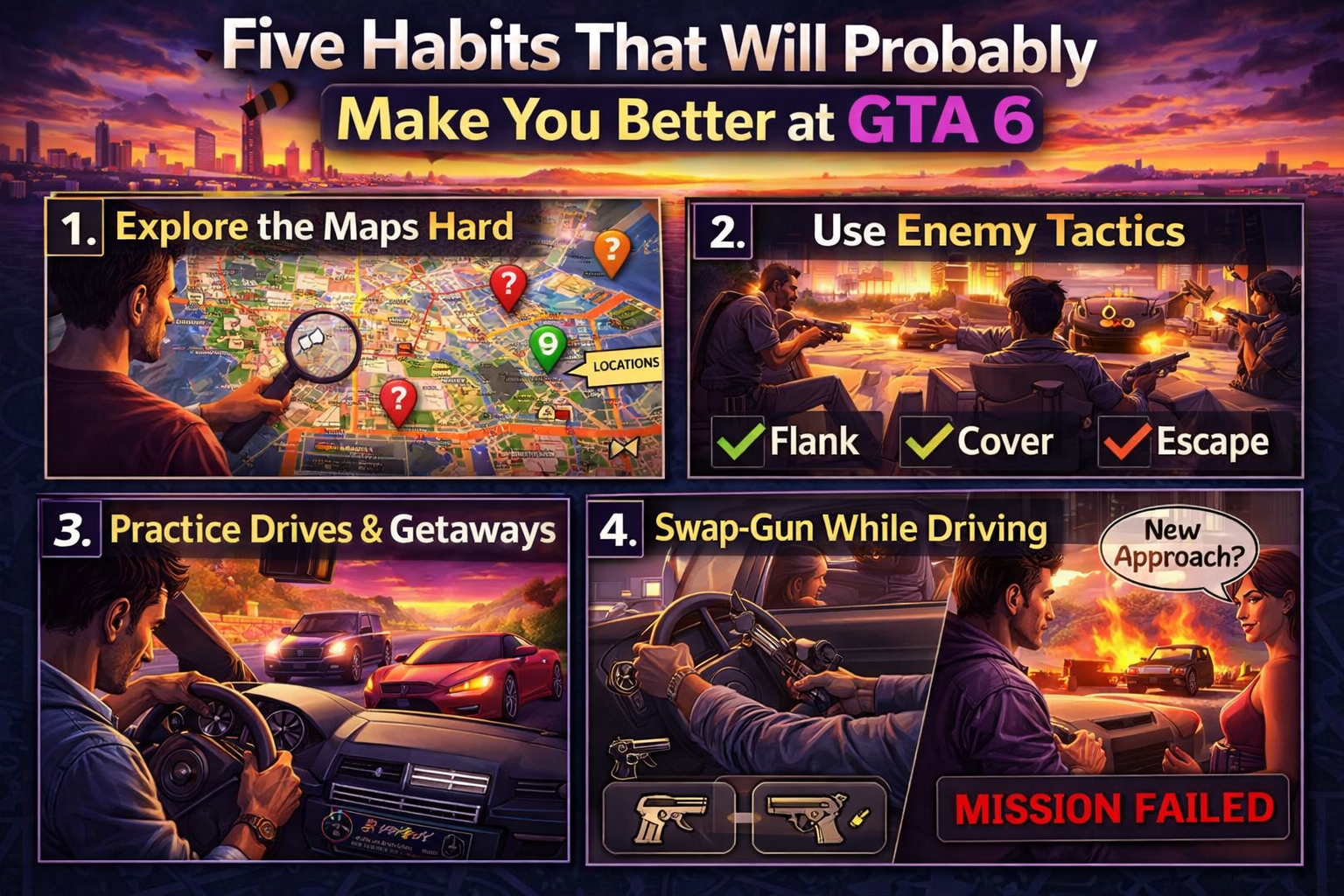
The first useful habit is situational patience. Many failures in Rockstar games happen not because players lack skill, but because they push forward without reading the environment. Entering a mission area too quickly, choosing a flashy escape route without checking traffic flow, or escalating a confrontation before understanding the terrain often creates unnecessary problems. A few seconds of observation can prevent several minutes of recovery.
The second habit is route awareness. Good players rarely depend entirely on the map line. They develop a feel for alternate turns, hiding spots, wider roads, and natural choke points. This matters in everything from police escapes to timed objectives. A player who understands the geography of the world has advantages that no weapon upgrade can fully replace.
Manage momentum, not just resources
A third habit is preserving momentum. GTA is a game where disorder can spiral. Losing a vehicle, wasting ammunition, or entering a mission already injured can force a chain of setbacks that drains both time and money. Better players learn to reset before things collapse completely. They replenish what matters, switch vehicles when needed, and avoid carrying chaos from one activity into the next unless the game specifically rewards it.
That connects to a fourth habit: selective aggression. Grand Theft Auto encourages excess, but experienced players know when to escalate and when to disappear. Not every conflict is worth prolonging. Not every police encounter should become a city wide war. Sometimes the smartest move is to break line of sight, change districts, or simply let a messy moment end before it consumes the next twenty minutes.
The fifth habit is attention to systems that look unimportant at first. Rockstar often hides practical knowledge inside side activities, ambient behavior, and environmental cues. How pedestrians react in certain districts, how weather affects roads, which neighborhoods stay busy late, where the cleanest vehicle spawns occur, how interiors connect to alleys or rooftops. These details may seem minor individually, but together they form the kind of understanding that makes the world feel usable rather than overwhelming.
Why mastery in GTA is rarely about perfection
Unlike more rigid action games, GTA usually allows a degree of mess. That can mislead players into thinking discipline is unnecessary. In reality, the best play often looks casual precisely because it is informed. Skilled players improvise well because they know the systems underneath the chaos.
GTA 6 may amplify this dynamic if Rockstar increases the density of AI behavior, improves police logic, and builds a city with more meaningful variation between neighborhoods. In that kind of world, observation and judgment become even more valuable. The player who notices patterns will outperform the player who only reacts.
These habits are not difficult to develop. Slow down when entering new situations. Learn the roads instead of following every line blindly. Protect your momentum. Be aggressive with purpose, not out of habit. Pay attention to details the game does not explain loudly.
That may not sound as exciting as mastering a headshot or perfecting a drift, but it is often what separates players who merely survive a Rockstar world from players who feel fully in control of it. GTA has always rewarded personality. The next game will probably reward composure just as much.