
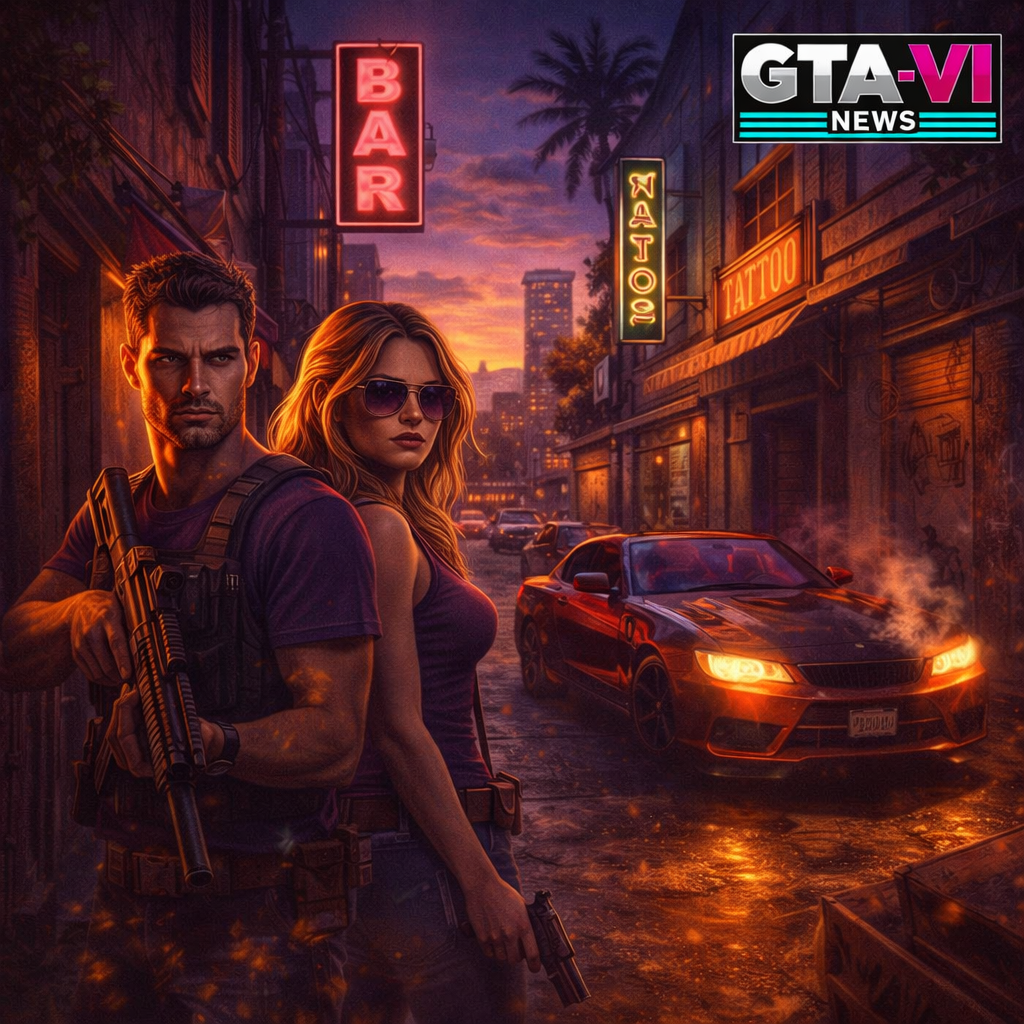
Rockstar’s greatest advantage as a studio may also be the thing that makes its games hardest to review clearly. Production value has a way of creating consensus before criticism begins. When animation is rich, dialogue scenes are polished, music placement is confident, and the world appears expensive at every turn, the eye is easily persuaded that design quality must be equally strong. Sometimes it is. Sometimes the relationship is weaker than it first appears.
GTA 6 will almost certainly intensify this problem. The game is expected to arrive with extraordinary technical polish, visual density, and scene to scene confidence. All of that deserves recognition. But serious criticism will need to ask a harder question: how much of the game’s excellence comes from design rather than surface sophistication?
This is not a cynical point. Production value matters in games, especially in a series so invested in atmosphere and social texture. A believable city depends on animation, audio, environmental art, and timing. Yet those achievements can still coexist with mission structures that feel conservative, systems that repeat familiar patterns, or writing that relies too heavily on old instincts. Reviewers who collapse these layers into one general sense of prestige risk missing what the game actually innovates and what it merely performs at a high level.
Design quality asks different questions
A review that prioritizes design quality has to look beneath the sheen. How much freedom do missions genuinely allow? Do systems interact in ways that create emergent stories, or are players mostly following carefully directed sequences that only simulate openness? Does the map encourage meaningful exploration, or does it rely on detail density to create the impression of depth without always delivering it?
These questions can be uncomfortable because Rockstar is extremely good at making controlled experiences look effortless. A heavily scripted mission may still feel cinematic and memorable. The issue is not whether it works on its own terms. The issue is whether GTA 6 advances the form of the open world game or mainly perfects Rockstar’s established way of staging it.
The same applies to writing. Strong performances and excellent scene direction can elevate dialogue even when the underlying characterization remains familiar. Critics will need to separate the pleasure of presentation from the substance of what is being said. Is the satire precise or repetitive? Are the protagonists genuinely complex, or mostly carried by performance and pacing?
Why this distinction matters for players
For players, separating production value from design quality is useful because it leads to better expectations. A game can be overwhelmingly impressive and still have structural limitations. It can also contain brilliant design inside a slightly uneven technical package. GTA 6 will probably do some things better than almost anyone else in the industry. That should not exempt it from close analysis of the things it chooses not to evolve.
This distinction also matters historically. Rockstar’s games influence the wider market. If critics reward polish without interrogating structure, the lesson absorbed by the industry is that expense alone deserves prestige. Better criticism can do more than score a product. It can clarify what kind of ambition is actually being achieved.
GTA 6 will be reviewed under extraordinary pressure, and much of the early coverage will naturally focus on how astonishing it looks and feels. That response will be understandable. The more valuable reviews, though, will ask the follow up question. Once the spectacle settles, what kind of game is underneath it?
That is the question that will matter six months later, after the launch noise fades and players are left with the work itself rather than the event around it.