
Meta description: Explore Vice City nightlife in GTA 6, with clear analysis of Vice City, Leonida, Jason, Lucia and Rockstar’s confirmed direction.
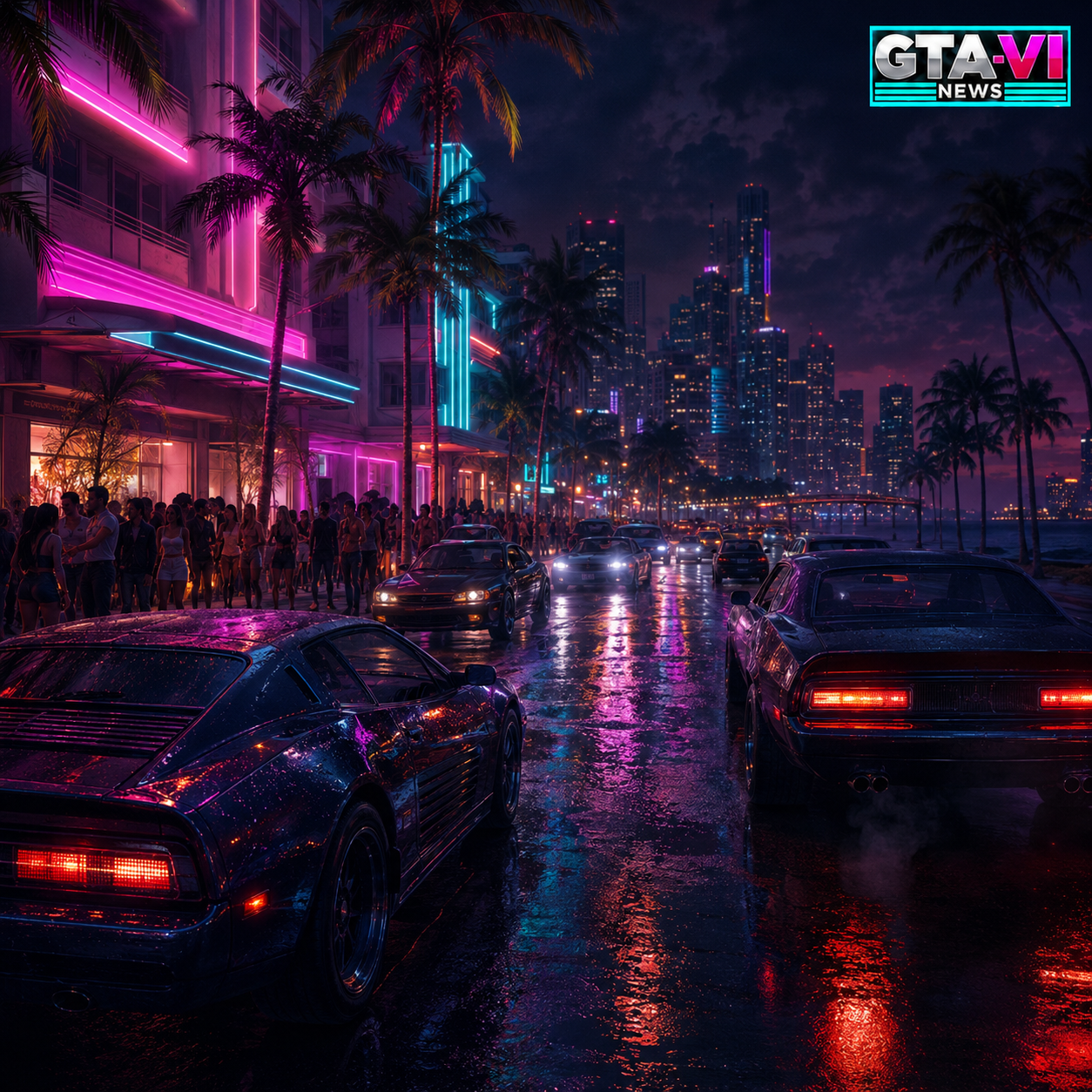
Rockstar’s best worlds work because they have attitude. With Grand Theft Auto 6, that attitude seems tied to sun, heat, money and the strange theatre of modern life. This article looks at how music, clubs and neon can carry the city identity, using confirmed details carefully and avoiding rumor dressed up as fact.
What Rockstar Has Confirmed
Rockstar lists Grand Theft Auto VI for PlayStation 5 and Xbox Series X|S, with the current official date set for November 19, 2026. The setting is the state of Leonida, with Vice City as the headline city. That gives the sequel a clear identity before a single mission begins. It is a crime story, yes, but the confirmed material also frames the game as a portrait of a place under pressure. Jason Duval and Lucia Caminos sit at the center of that pressure, and their relationship gives the campaign a more personal outline than a simple rise through the underworld.
Why This Feature Matters
The feature worth watching here is Vice City nightlife. In earlier Rockstar games, major systems often worked because they served tone, not because they shouted for attention. clubs, radio culture, crowds, neon can become meaningful only when the world reacts naturally around them. That is the difference between a checklist and a believable space. Fans may be surprised that the most memorable moments do not come from the largest set pieces, but from how the city behaves before and after them.
There is also a cultural angle. Vice City is not a blank playground. It carries memories from an older era of the series, but Rockstar cannot depend on nostalgia alone. The new version needs to feel contemporary, especially in how it treats fame, phones, money and public behavior. A modern city watches itself constantly. That idea suits GTA better than almost any other franchise.
How It Could Shape Everyday Play
A strong version of this idea would affect ordinary movement. Driving through Vice City, stopping near a storefront, crossing into the Keys or heading inland should not feel like passing between decorative zones. Each area needs a tempo. Crowded streets should feel different from wet backroads. Nightlife should change the mood of a district. A quiet coastal route should let the player breathe. This changes everything because open world games live between missions, not only during them.
Still, expectations should stay grounded. Rockstar has shown tone, characters and locations, not a full mechanical breakdown. A smart article about Grand Theft Auto 6 gameplay should separate confirmed details from careful interpretation. The safer reading is that the revealed material points toward density, performance and character focus rather than a single miracle feature.
The Bigger Design Question
The challenge is restraint. Rockstar can fill Leonida with systems, but the best result would be selective and readable. If Vice City nightlife becomes too busy, it could turn into noise. If it is too shallow, players will notice quickly. The ideal balance is more subtle. The world should suggest possibilities, then let players test them without forcing a tutorial into every corner.
A feature like this also affects replay value. Players remember a mission, but they return to a world. If Leonida can surprise them with local detail, changing weather, sharp radio writing and believable public spaces, the game may hold attention long after the campaign credits roll. That is the real test. Not noise. Texture.
What It Means for GTA 6
The strongest promise of GTA 6 features is not one isolated mechanic. It is the way those mechanics can overlap. A social clip, a police response, a local business, a vehicle choice and a character call can all point back to the same living state. That is where Leonida could separate itself from Los Santos. Bigger is expected. More believable is harder.
The official character pages also hint at a world built from overlapping circles. Jason’s connections in the Keys, Lucia’s push for a better life, Cal’s paranoia, Boobie’s business front and the Real Dimez music thread all suggest a social map as much as a physical one. That structure could make side content feel less detached from the main story.
A Practical Reading of the Feature
For players, Vice City nightlife will matter only if it changes behavior. A beautiful street is useful, but a street with readable traffic, shifting crowds and different routes is better. The same rule applies to clubs. It should help the player understand where they are, what kind of trouble may happen there and why the area belongs in Leonida rather than in a generic open world.
Still, expectations should stay grounded. Rockstar has shown tone, characters and locations, not a full mechanical breakdown. A smart article about Grand Theft Auto 6 gameplay should separate confirmed details from careful interpretation. The safer reading is that the revealed material points toward density, performance and character focus rather than a single miracle feature.
Why Readers Should Watch This Closely
Search interest around GTA 6 is enormous, but the useful conversation is narrower. The confirmed material shows a release on PlayStation 5 and Xbox Series X|S, a move through Leonida and a story centered on Jason Duval and Lucia Caminos. From there, Vice City nightlife becomes a sensible feature to analyze because it touches both presentation and play. This is where the design becomes interesting, it also gives Rockstar room to make satire feel current without turning every joke into a speech.
The final judgment will come when players can explore Leonida themselves. Until then, Vice City nightlife remains one of the clearest signs of Rockstar’s ambition. Not just a bigger map. A sharper world.