
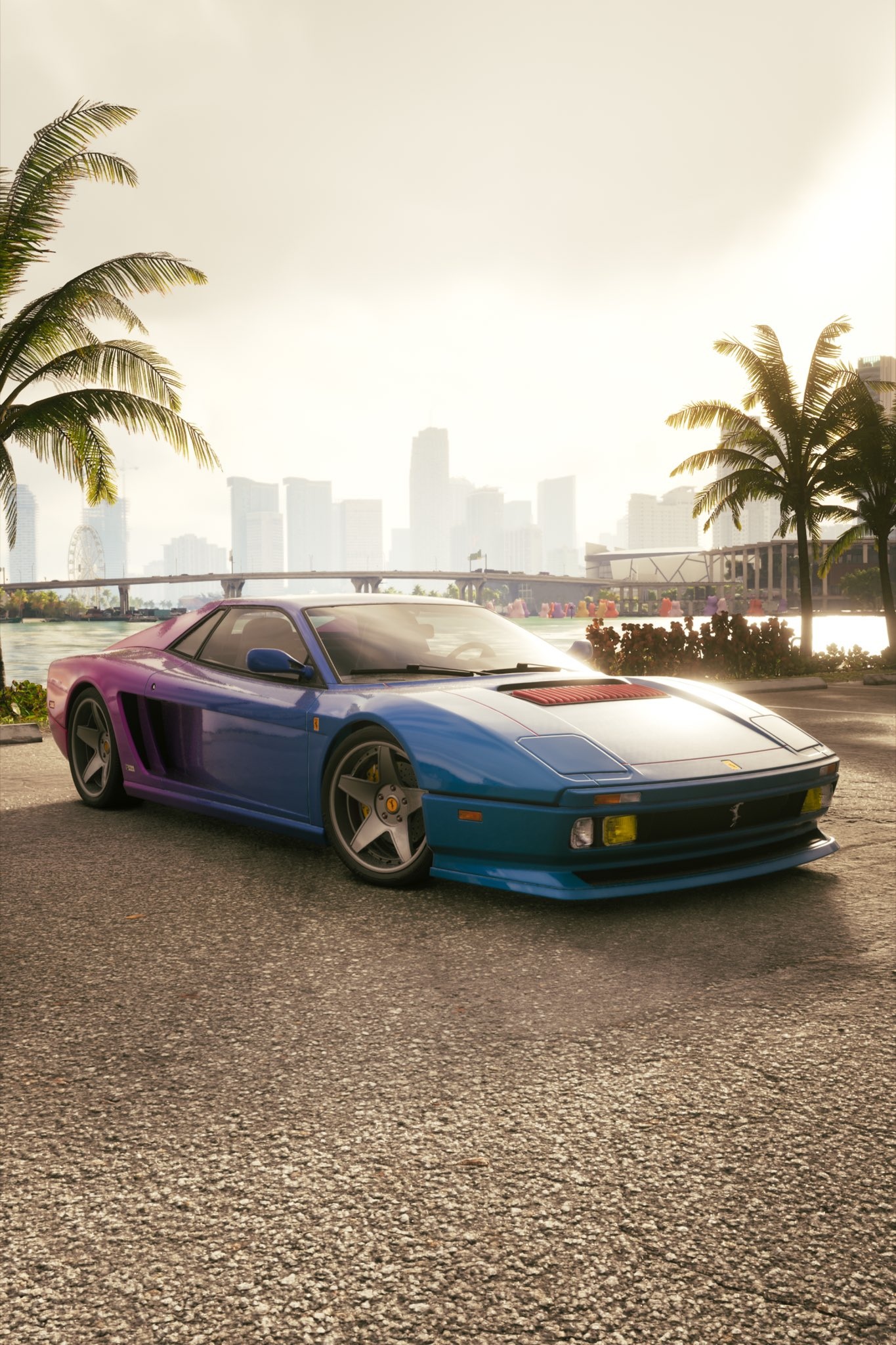
The six-car collection shows how fictional styling can survive the move from screen to street.
A crossover between two design cultures
Grand Theft Auto has spent years inventing vehicle brands that feel familiar without existing in a showroom. Now a selection of those designs has been recreated by West Coast Customs, the Los Angeles workshop known for bespoke automotive projects. The partnership turns six fictional GTA 6 vehicles into machines that can be filmed in motion.
The result is not merely a car advertisement with game logos attached. It is a closer attempt to reproduce the unusual proportions and visual identities of models designed for a world where exaggeration is part of the joke.
Looking at the larger picture
Comparing the virtual and physical versions also highlights the role of paint and lighting. Game engines can control reflections, time of day and the viewer’s camera position. A real vehicle encounters unpredictable skies, streetlights and viewing angles. Builders have to create a finish that remains recognizable without the perfect conditions used in promotional screenshots. That challenge is as much about visual storytelling as automotive engineering.
The collaboration may also inspire closer examination of GTA’s broader car culture. Fictional manufacturers, vehicle names and exaggerated styling help define the series’ particular sense of humor. A well-made replica reinforces those associations, but its real appeal lies in showing that people recognize the design independently of the screen. The cars can stand as objects of craft even for viewers who have never played the game.
One more consideration
The project also illustrates how the game borrows from real-world design history without becoming a catalog of licensed cars. The fictional naming system gives Rockstar room for satire and stylization, while the recognizable silhouettes keep the vehicles approachable to players.
There is no need to assume every replica will appear at public events or become a retail product. The confirmed significance lies in the builds themselves, their presentation and the unusual collaboration between a game studio and a custom fabrication workshop.
Recognizable shapes, invented identities
The fleet features names familiar to GTA players, including the Grotti Cheetah, Pegassi Tempesta, Progen Emerus and Albany Buccaneer. Their visual inspirations range from vintage Italian exotics to modern track-focused performance cars and classic American muscle. Those references are part of Rockstar’s longstanding fictional automobile language.
The Progen Emerus recalls the McLaren Senna’s striking aerodynamic forms. The Tempesta shares cues with a Lamborghini Huracán, while the Cheetah evokes a Ferrari Testarossa. Recreating those influences outside the game requires choices about which details matter most to recognition.
Making a digital shape work in metal
A videogame vehicle can hide engineering compromises. Real doors require hinges and seals. Wheels need suspension travel. Panels must fit around a chassis, while cooling and exhaust systems require practical space. Builders can use composite materials and precision-machined components to bridge some of those gaps.
Reports on the project describe substantial fabrication work and finishes matched closely to the digital originals. The work is interesting because it exposes the practical distance between an appealing 3D model and a functional road-going object.
Why Miami is the natural setting
Footage of the cars in a Miami setting strengthens the connection to Vice City and the broader Leonida world. The warm streets, palm-lined backgrounds and urban car culture offer a recognizable context for the builds. The same vehicles in a neutral studio might have looked impressive, but they would have lacked this particular narrative connection.
A convincing automotive promotion uses place as carefully as product. Here the real environment echoes the fictional one, inviting viewers to imagine a digital driving scene playing out beyond the screen.
An exhibit of craft, not a feature announcement
The replicas may excite people who are interested in GTA 6 vehicle customization, but they do not prove which tuning parts the final game will allow or how detailed its handling model will be. Real manufacturing decisions and game mechanics belong to different processes.
The more persuasive story is about cross-disciplinary craftsmanship. Artists invent a car for a satirical digital universe. Fabricators then reinterpret it in real materials. Seeing the finished machines in motion demonstrates how distinctive Rockstar’s fictional automotive designs have become.
Perhaps the most interesting detail is how easily the fictional badges now support real-world recognition. A person can distinguish a Grotti or Pegassi without consulting a technical specification sheet. That is a sign of consistent design language built across years of games. Reproducing it physically makes the achievement visible in a way that even the most detailed screenshot cannot quite match.