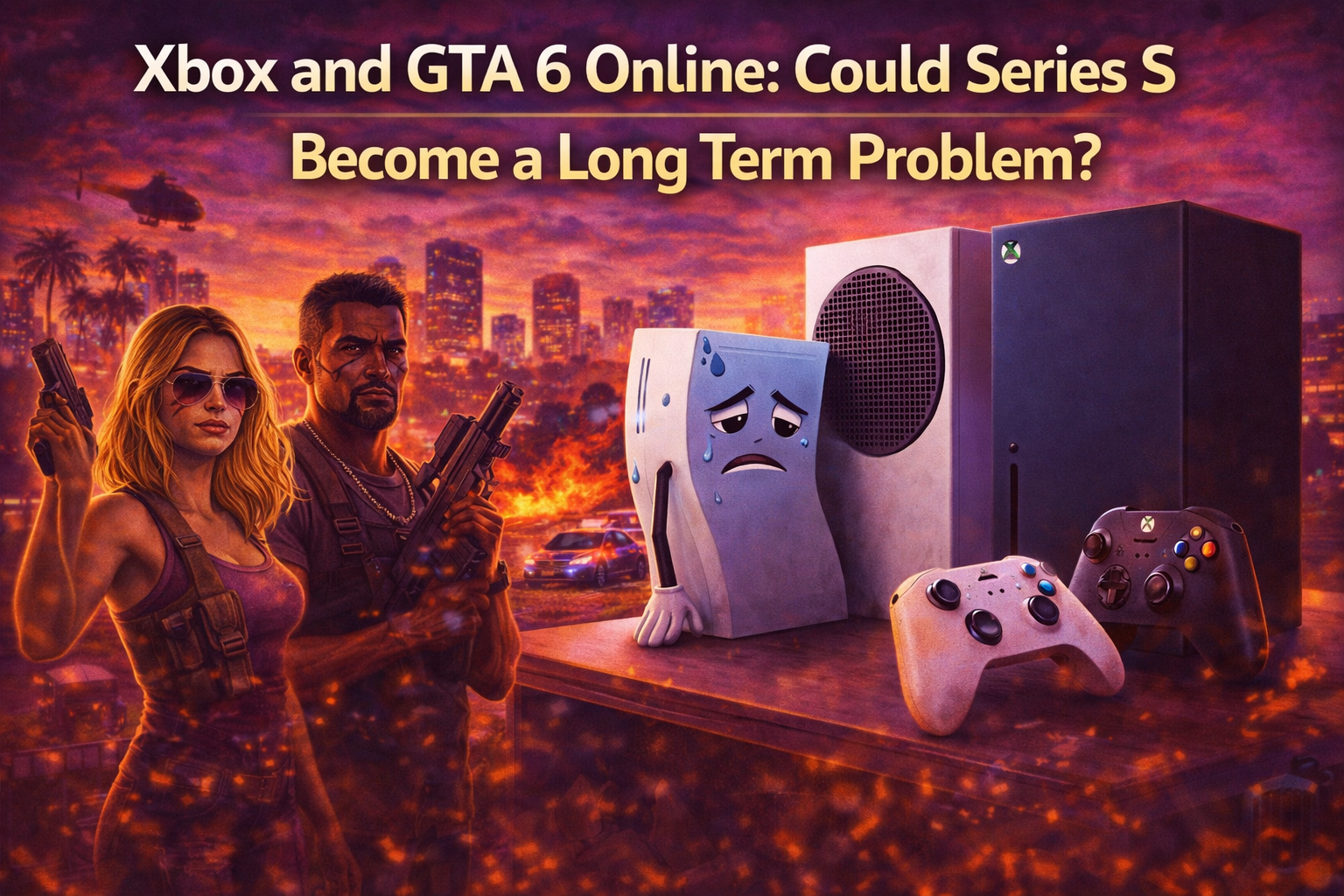
If Grand Theft Auto 6 includes a major online ecosystem, Microsoft’s split console strategy could face one of its clearest stress tests yet. The Xbox Series X has the power profile expected of a top tier current generation machine. The Xbox Series S, while capable, operates under tighter constraints that become more noticeable in ambitious games with dense worlds and evolving systems. Single player compromises are one thing. Long term online support can create a much tougher problem.
Online games tend to expand over time. More items, more systems, more visual clutter, more networking demands, more environmental complexity. A hardware baseline that seems manageable at launch can become restrictive years later as developers pile on updates. If Rockstar plans GTA 6 Online as a long horizon project, the Series S may force hard choices about feature parity, density, and how far the game can grow without fragmenting the console audience.
This is not just a question of graphics. Online environments demand consistency. Populated spaces, synchronized events, and heavy player activity can expose memory and performance limitations more sharply than scripted single player sequences. A system that handles the story well enough may still struggle when the world becomes busier, more systemic, and more socially unpredictable.
Rockstar will likely prioritize continuity
The most probable outcome is that Rockstar designs its online layer conservatively enough to keep the Xbox family intact. That would mean careful scaling, selective reductions, and perhaps some hidden limits on density or visual complexity. From a business standpoint, that makes sense. Breaking parity publicly would create immediate controversy and potentially upset a large installed user base.
Yet those compromises can have creative costs. If the weaker baseline keeps the world from becoming as reactive or visually rich as it might otherwise be, then Series X owners are effectively experiencing a version shaped by the lower ceiling of the ecosystem. This is the core tension behind the Series S debate, and GTA 6 may give it its most visible mainstream example.
There is also the issue of longevity. Rockstar wants its online products to remain active for years. That makes hardware planning unusually important. A launch version that works today must also leave space for future content, future expectations, and future comparison with PC or upgraded console hardware. The tighter the baseline, the harder that becomes.
The problem may emerge slowly, not instantly
Series S might not look like a problem at launch. Rockstar is skilled enough to make a first impression that feels polished and complete. The harder question is what happens two or three years into the game’s life when the online ecosystem has expanded and technical ambition starts colliding with baseline constraints.
That is when players may begin to notice whether certain districts feel less dense than expected, whether big events are carefully limited, or whether visual ambition stalls. These outcomes may never be framed publicly as Series S problems, but the design pressure could still be there.
For Xbox, this is a delicate issue because Series S has been central to the platform’s affordability pitch. But major releases eventually test every philosophy. GTA 6 Online could be the game that makes players and analysts ask whether flexibility at entry has translated into restriction at the top end.
Rockstar will likely avoid saying so directly. The game will ship, the systems will work, and millions will play. But beneath that success, the Series S question may linger. In a long term online world, the lowest common denominator has a way of revealing itself over time.