
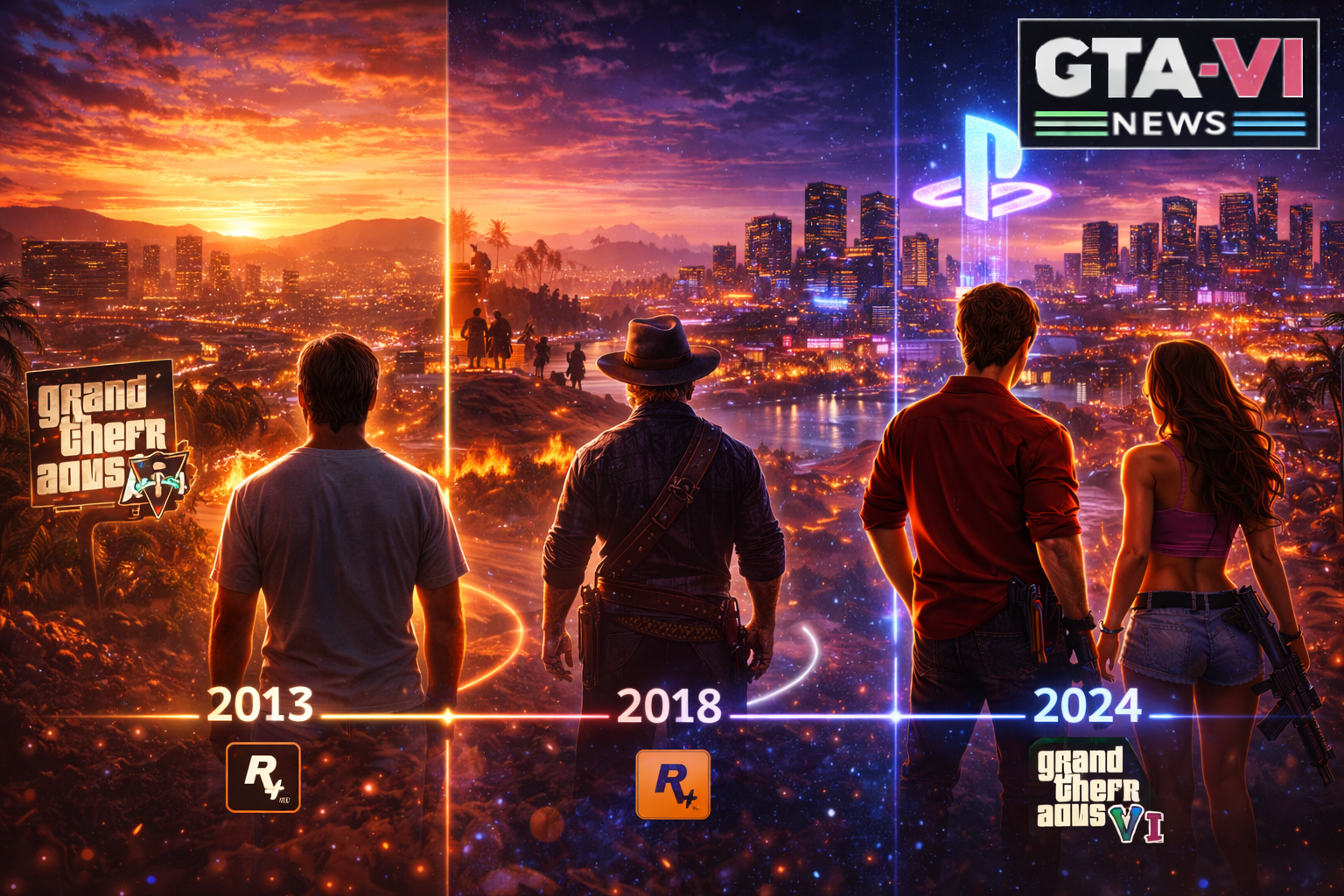
When Grand Theft Auto V launched in September 2013, few players expected the next chapter to take more than a decade to arrive. Yet here we are. The gap between releases is approaching thirteen years, making GTA 6 one of the longest waits in modern gaming history.
For fans, the question keeps resurfacing: why is the development cycle so long? The answer lies in a mix of technological ambition, shifting studio priorities, and the massive success of Rockstar’s previous projects. In short, the scale of modern game development has changed dramatically. And Rockstar Games is determined to raise the bar again.
The Enormous Success of GTA V Changed Everything
To understand the timeline, it helps to look back at what happened after GTA V launched. The game quickly became one of the most successful entertainment products ever created. It sold millions within days and kept growing year after year.
However, the real turning point came with GTA Online. What began as a multiplayer extension turned into a massive digital ecosystem. New content, heists, vehicles, and story events arrived regularly. The online world evolved continuously, generating enormous revenue and maintaining a huge player base.
This success reshaped Rockstar’s priorities. Rather than rushing a sequel, the studio focused on expanding the existing universe. From a business perspective, it made sense. From a fan perspective, it meant patience.
Still, that is only part of the story.
Modern Open-World Games Take Much Longer to Build
Game development in 2026 is very different from what it was in 2013. The scale of modern titles has expanded dramatically. Larger maps, deeper AI systems, realistic animations, and complex world simulation all require enormous resources.
Sources close to the industry often describe GTA 6 as Rockstar’s most ambitious project to date. Reports suggest the game will feature a reimagined Vice City, a vast open world inspired by Florida, and a new generation of dynamic systems.
Creating that level of detail takes time. Buildings are no longer simple textures. Characters behave more naturally. Traffic patterns, weather systems, and crowds are designed to react to player actions. Every layer adds complexity.
This is not just another sequel. It is an attempt to redefine what an open-world game can be.
Red Dead Redemption 2 Also Played a Major Role
Another factor often overlooked is Rockstar’s development schedule. While fans waited for the next Grand Theft Auto, the studio was heavily focused on another project: Red Dead Redemption 2.
Released in 2018, that game required nearly every Rockstar studio worldwide to collaborate. It became one of the most detailed open-world experiences ever produced. The project reportedly involved thousands of developers and several years of intensive work.
During that period, the majority of Rockstar’s resources were tied to the western epic. Development on GTA 6 was happening in the background, but it was not the studio’s primary focus yet.
Once Red Dead Redemption 2 launched, attention gradually shifted toward the next Grand Theft Auto.
Rockstar Is Changing How It Develops Games
The studio itself has evolved over the past decade. Reports from inside the company indicate Rockstar has restructured its development approach, focusing more on long-term expansion rather than one massive launch.
In practice, this means GTA 6 may arrive with a large base world that expands over time. New cities, missions, and story arcs could be introduced through updates rather than waiting for a traditional sequel.
Fans may be surprised by this strategy. However, it reflects how modern games operate as evolving platforms rather than one-time releases.
If that plan succeeds, GTA 6 could remain active for many years after launch.
Leaks and Internal Changes Slowed Development
Development has not been completely smooth either. In 2022, a major leak exposed early gameplay footage from GTA 6. Dozens of development clips circulated online, revealing unfinished environments, characters, and mechanics.
Rockstar quickly confirmed the breach and stated that development would continue as planned. Even so, incidents like this inevitably disrupt production pipelines and security processes.
Beyond the leak, Rockstar has also adjusted its internal culture. Reports suggest the company has moved away from the intense “crunch” schedules that once defined parts of the industry. A healthier development environment often means longer timelines but better long-term results.
Quality takes time. Rockstar seems willing to accept that trade-off.
The Expectations Are Higher Than Ever
Perhaps the biggest reason for the long wait is simple: expectations. The Grand Theft Auto franchise carries enormous cultural weight. Each release sets new standards for open-world design, storytelling, and technical innovation.
Players expect the next installment to feel revolutionary. Not just larger. Better. More alive.
That pressure shapes every decision during development. Rockstar cannot release an average sequel. The next game must redefine the genre once again.
And that kind of ambition rarely follows a predictable schedule.
A Long Wait, but a Defining Moment for the Series
Thirteen years is an unusually long gap between entries in a blockbuster franchise. Yet the circumstances surrounding GTA 6 are equally unusual.
A record-breaking predecessor. A massive online platform. The development of Red Dead Redemption 2. A shift in studio culture. And the sheer scale of modern game design.
All of these factors combined to stretch the timeline.
When Grand Theft Auto VI finally arrives, it will carry the weight of an entire generation of expectations. Whether the wait proves worthwhile remains to be seen. But one thing is clear.
The next chapter is not just another sequel. It is Rockstar’s most ambitious gamble yet.