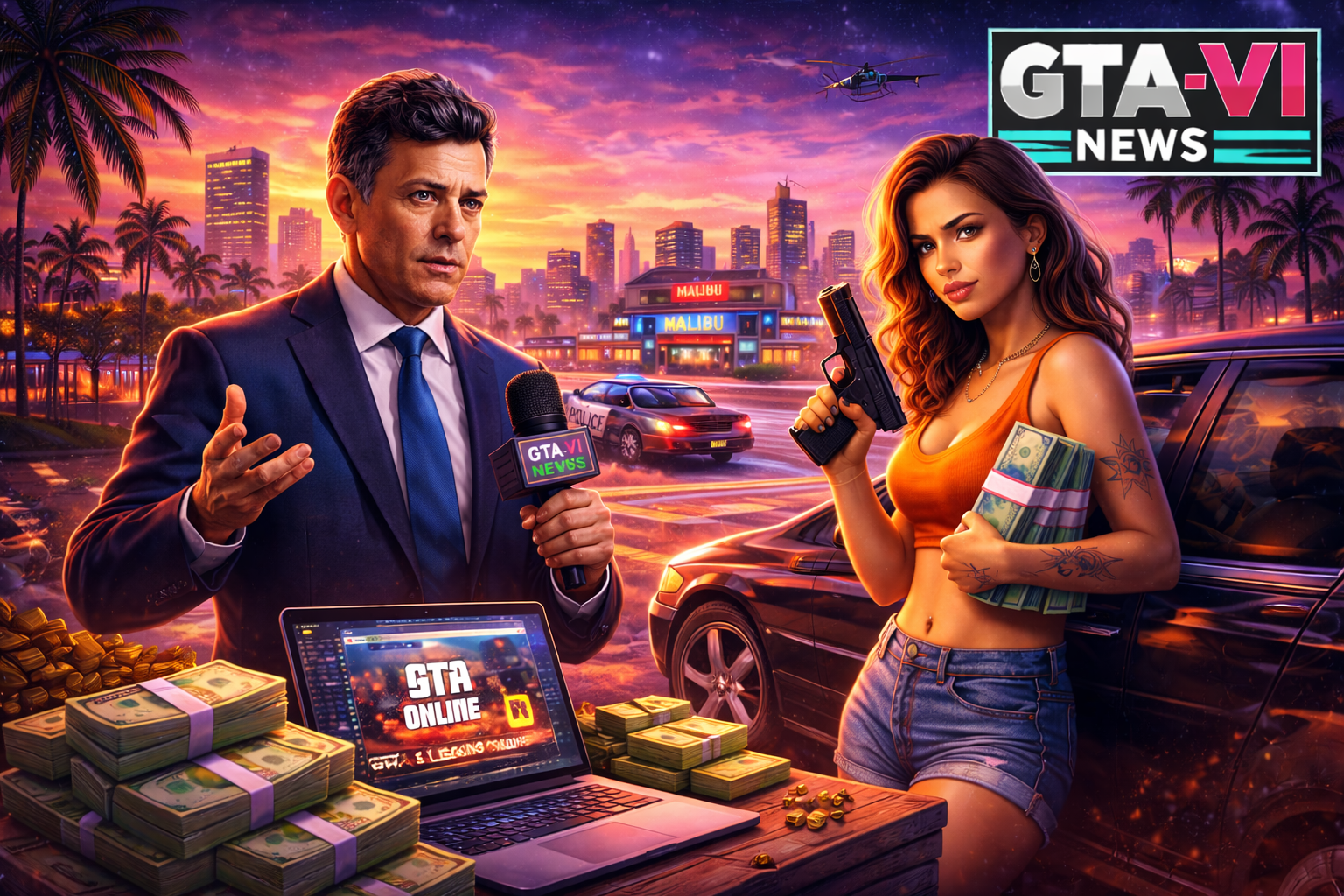
Take-Two Interactive has addressed two of the most persistent questions surrounding the Grand Theft Auto franchise: whether GTA 6 is still on track and what happens next with GTA Online. In recent executive remarks tied to financial briefings, the publisher reaffirmed its launch expectations for the next mainline entry while making it clear that the current online platform will continue to play an active role.
The clarification does more than steady investor nerves. It also gives players a clearer picture of how Rockstar plans to manage one of gaming’s largest ecosystem transitions.
GTA 6 Remains Central to the Release Schedule
According to Take-Two leadership, Grand Theft Auto VI remains a cornerstone of the company’s upcoming release roadmap. Executives described the project as a major driver for the next fiscal cycle and expressed confidence in its projected launch window.
That level of certainty is notable. Earnings calls often rely on cautious language. When executives speak directly about timing, it usually reflects internal milestone confidence rather than marketing optimism.
Fans may be surprised how closely financial communications are parsed by analysts. A single verb change can move market expectations. This time, the tone was steady and deliberate.
No Immediate Sunset for GTA Online
The second point of clarification concerns GTA Online, the multiplayer platform that has remained active and profitable for years. Take-Two indicated that support will continue even after GTA 6 launches. There is no plan for an abrupt shutdown tied to the new release.
This aligns with both business logic and player behavior. GTA Online maintains a large, engaged audience and a mature in-game economy. Ending that service at the moment a new title arrives would create unnecessary disruption for both users and revenue streams.
Instead, the publisher appears to favor continuity paired with gradual evolution.
A Transition, Not a Replacement
The most likely scenario is a phased transition model. The existing GTA Online environment continues to operate while Rockstar introduces a new or expanded online layer connected to GTA 6. Over time, player activity shifts naturally toward the newer platform.
Short version. Migration by choice, not by force.
This approach reduces friction and avoids splitting the community through sudden service closures.
The Economics Behind the Decision
From a publishing standpoint, keeping GTA Online active is a rational move. Live service titles generate recurring revenue through optional purchases and seasonal updates. They also provide predictable engagement metrics between major launches.
However, the reasoning is not purely financial. Community stability matters. Long-running online games create social networks, creator communities, and competitive scenes. Preserving those networks protects brand loyalty during franchise transitions.
In contrast, hard resets often weaken trust, even when technically justified.
Rockstar’s History With Platform Overlap
Rockstar has rarely treated generational change as a clean break. Earlier online services and platform versions often remained active well into the lifecycle of newer releases. Support tapered gradually as player populations shifted.
This pattern suggests a preference for behavioral transition. When the new experience offers more value, players move without pressure. That strategy tends to produce stronger long-term retention.
This changes everything for how the next launch phase may feel.
Implications for the Next Online Era
Although Take-Two did not outline technical details for the future online component tied to GTA 6, the confirmation of continued GTA Online support implies a layered rollout strategy. Rockstar can introduce new systems, infrastructure, and moderation tools without destabilizing the existing environment.
Modern multiplayer expectations have shifted. Security, anti-cheat technology, and player safety tools now sit at the center of online design. A next-generation framework built alongside Grand Theft Auto VI would likely reflect those priorities from the start.
Players should expect iteration, not duplication.
Managing Community Expectations
Community reaction to the executive clarification has been measured. Many players anticipated some form of overlap. Others worry about fragmentation if two online ecosystems operate in parallel.
That concern is legitimate. Split player bases can affect matchmaking speed and event participation. The outcome depends on how Rockstar handles identity systems, progression links, and social features across platforms.
Execution will define acceptance.
Why the Messaging Matters Now
Reaffirming the GTA 6 launch trajectory while confirming ongoing online support serves a broader purpose. It stabilizes expectations ahead of heavier marketing phases. Investors gain predictability. Players gain clarity.
Rockstar traditionally reveals gameplay and feature specifics closer to release. Take-Two’s role is to frame direction without pre-empting those reveals. The current statements fit that pattern — strategic, limited, and intentional.
No hype language. Just positioning.
Current Outlook
The latest Take-Two commentary establishes a dual-track future. GTA 6 remains firmly scheduled within the publisher’s forward plan, while GTA Online continues operating through a managed transition period. The franchise is evolving, not resetting.
For players, this means continuity alongside innovation. For the publisher, it protects both revenue flow and community trust. For the series itself, it marks the beginning of a new chapter without erasing the current one.
Big launches change franchises. Smart transitions sustain them.