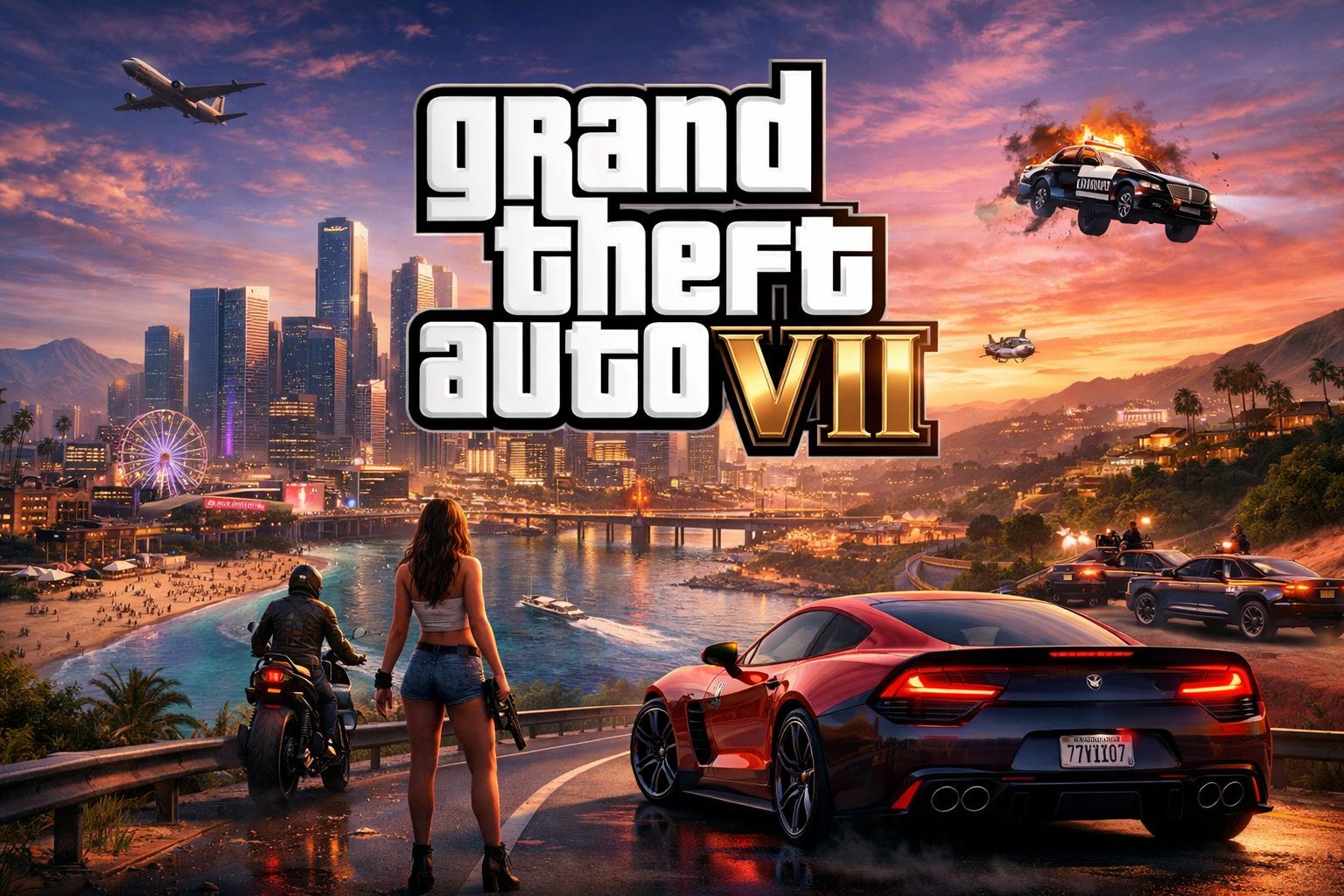
Even before GTA 6 reaches players’ hands, an inevitable question has begun to surface. What comes after? The curiosity around GTA 7 is not impatience. It is a reflection of how radically the series has evolved and how uncertain the future of blockbuster sequels has become.
Speculating about GTA 7 today is less about predicting features and more about understanding direction. The next Grand Theft Auto will not simply follow GTA 6. It will respond to the world that exists after it.
Why GTA 7 feels different as a concept
Previous GTA entries arrived in relatively predictable cycles. GTA 7 will not.
GTA 6 is positioned as a long-term platform rather than a short-lived release. Its online ecosystem, narrative scale, and technical foundation are expected to evolve for years. That longevity changes the role of a sequel.
Fans may be surprised that GTA 7 might not be defined by size alone. Innovation may matter more than expansion.
Rockstar’s likely starting point
has historically avoided radical shifts for the sake of novelty. Instead, it builds upon proven foundations while rethinking how players interact with them.
For GTA 7, the starting point will almost certainly be systemic depth rather than map scale. AI behavior, world simulation, and player consequence are areas where Rockstar has consistently invested.
The question is not how big the city will be. It is how alive it will feel.
A world that reacts, not just exists
GTA 7 is likely to push reactive systems further than any previous entry.
NPCs may remember player actions over longer periods. Cities could evolve based on economic shifts or player driven disruption. Law enforcement might respond strategically rather than procedurally.
In contrast to earlier games where chaos reset quickly, GTA 7 could embrace persistence.
This changes everything. Not because freedom disappears, but because actions carry longer shadows.
The challenge of modern satire
One of GTA’s defining traits has always been satire. That task grows harder with each generation.
Real world events increasingly outpace parody. Social media, misinformation, and performative culture blur the line between exaggeration and reality.
GTA 7 may respond by shifting tone. Less overt mockery. More observational critique.
Satire could become quieter, sharper, and more unsettling.
Technology as an invisible driver
By the time GTA 7 enters full production, hardware capabilities will have changed significantly.
AI assisted animation, procedural dialogue systems, and real-time world generation are likely to mature. These tools could allow Rockstar to create density without manual scripting.
Rather than handcrafted spectacle everywhere, GTA 7 might rely on systems that generate believable moments dynamically.
The result would feel less curated, more organic.
Rethinking protagonists and perspective
GTA 7 may also revisit how stories are told.
Multiple protagonists could remain, but their roles might shift. Instead of parallel narratives, perspectives could intersect fluidly.
Players might influence not just outcomes, but whose story becomes central.
This approach would align with Rockstar’s growing interest in character driven consequence.
Online integration without dominance
One of the biggest questions surrounding GTA 7 is its relationship with online play.
GTA Online redefined monetisation and longevity. GTA 7 cannot ignore that legacy, but it may rebalance it.
Rather than a dominant parallel mode, online systems could be woven more naturally into the core experience.
Shared spaces. Optional interactions. Persistent worlds without forced participation.
Integration rather than separation.
The risk of diminishing returns
Every long-running series faces a critical risk. Familiarity.
GTA 7 must justify its existence beyond iteration. That justification may come through restraint rather than escalation.
Smaller but denser environments. Fewer systems with deeper interaction. Narrative focus over mechanical abundance.
Doing less, better.
Why GTA 7 may arrive later than expected
If GTA 6 fulfills its role as a long-term platform, Rockstar will have little incentive to rush.
GTA 7 could arrive a decade or more after its predecessor. By then, player expectations and industry norms will have shifted again.
Rockstar has shown it prefers to release rarely, but decisively.
A personal interpretation
My reading is cautious.
GTA 7 is unlikely to chase spectacle for its own sake. It will respond to what GTA 6 reveals about player behavior, longevity, and fatigue.
The next leap may be quieter, more systemic, and more deliberate.
That subtlety could be its defining strength.
What players should realistically expect
Players should not expect GTA 7 to arrive quickly.
They should not expect it to simply be bigger.
They should expect it to feel different in ways that are difficult to summarise in bullet points.
Rockstar’s most meaningful changes often reveal themselves slowly.
The broader industry context
By the time GTA 7 emerges, the industry will likely look very different.
Subscription models, live services, and AI generated content will all influence design decisions.
Rockstar’s challenge will be to adopt what enhances immersion and reject what undermines authorship.
That balance has always defined its success.
The final takeaway
Asking what GTA 7 looks like today is less about prediction and more about philosophy.
It will not simply follow GTA 6. It will respond to it.
When it arrives, GTA 7 will likely feel inevitable in hindsight and surprising in practice.
That tension has always been the series’ greatest asset.