
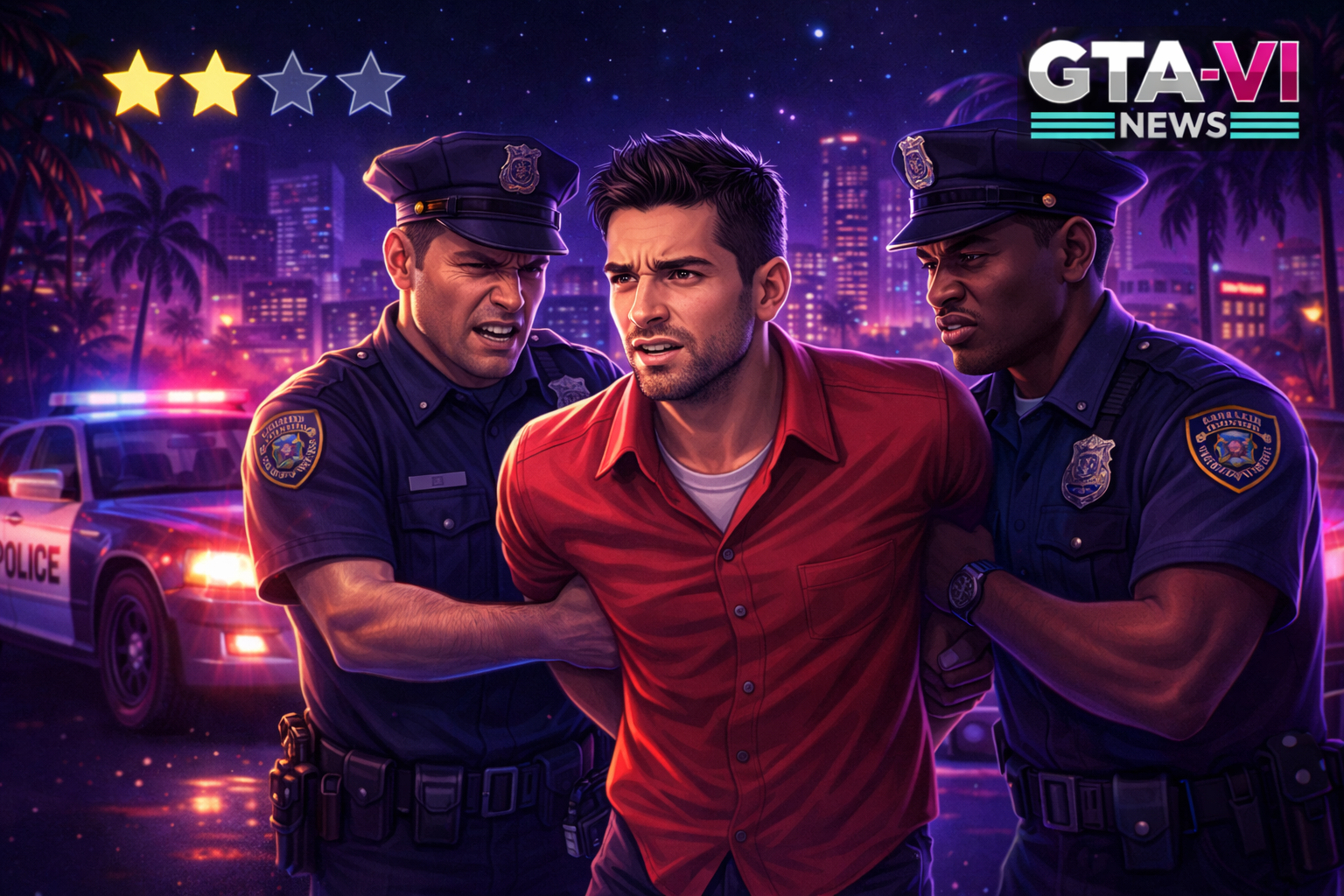
As excitement builds around Grand Theft Auto VI, players are taking a closer look at one of the series’ most defining mechanics: the wanted level system. The structure of escalating police response has shaped every GTA world for decades. Now, a growing number of fans are wondering whether the next chapter should change how the law reacts at the lower end of that spectrum. In their view, the early-star penalties in previous games felt disproportionate. They argue that the police response to minor offenses could be more realistic and more engaging in GTA 6.
A Long-Standing System Under Renewed Scrutiny
For many players, the wanted level system has always been central to the GTA identity. It fuels chaos, tension, and the thrill of escape. But it has also sparked debate. Some fans question whether the leap from harmless mischief to rapid police escalation has been too steep, especially in earlier entries like GTA 5. The critique does not suggest removing pressure or danger from the game. Instead, it reflects a desire for nuance consequences that match the scale of the crime.
Fans may be surprised that the conversation is not just about realism. It is also about rhythm and balance. When a player accidentally bumps a car or spawns minor disorder, it can feel jarring to draw immediate lethal force. The hope is that Rockstar might adjust the early tiers, allowing smaller mistakes to remain small. Players want the intensity when the stars stack up. They simply want breathing room before it does.
The Case for Softer Early Reactions
Supporters of change believe that lowering punishment for one-star offenses could make the world feel more alive and dynamic. A less aggressive response might add greater texture to gameplay. Instead of fleeing for survival when a pedestrian reports stolen sunglasses, players could experience more believable interactions. Officers might warn, question, or attempt a basic arrest without launching into full pursuit.
There is also a creative angle to consider. One of the strongest appeals of GTA’s open world lies in player freedom — the ability to experiment, explore, and improvise without constant high-risk pressure. A revised early-stage wanted system could enhance that exploration, particularly in a map as large and detailed as the one being built for GTA 6. Smaller mistakes could lead to smaller confrontations, allowing the game to escalate naturally based on player choice.
Why Others Want the System Left Alone
Not everyone is convinced. Some fans argue that GTA’s chaos is rooted in unpredictability. They enjoy the sudden urgency that police intervention can spark. For them, the wanted stars are not simply penalties — they are opportunities. A parking dispute can become a chase scene. A minor altercation can become a story. They worry that reducing pressure at the early levels could soften the identity that helped make GTA timeless.
There is also the question of pacing. For some players, sudden escalation keeps the game sharp and engaging. They do not want the world to feel too forgiving. If the risk fades, they fear the thrill will fade with it.
Realism Versus Entertainment
This debate touches on a larger question that GTA 6 must face: should realism win when it challenges entertainment? Rockstar has proven time and again that balancing these two forces can lead to groundbreaking results. The early trailer footage hints at a game that embraces real-world energy while remaining larger than life. With the new map taking fans into a modern Vice City, the environment itself may demand more believable systems.
And yet, Grand Theft Auto has never been a strict simulation. Its strength lies in exaggeration. If the game becomes too accurate in its policing structure, some players fear it could lose the fun that defines the franchise.
What Adjustments Could Look Like
Even if Rockstar keeps the overall framework of the wanted system intact, there is room for subtle evolution. One option could be blending NPC behavior with police logic. Witnesses might notice crimes more slowly. Officers might give verbal warnings before chasing. Minor violations could incur fines rather than force. These adjustments would not weaken the system — they could refine it.
There is also the potential for location-based nuance. In wealthy districts, a small crime might trigger fast response. In rural pockets, law enforcement might be slower or disinterested. A more flexible system would deepen immersion without diluting challenge.
Player Choice at the Center
The most compelling argument for revised early punishment is the effect it could have on player agency. GTA 6 is expected to expand freedom more than any previous entry. With a larger map, richer storytelling, and enhanced animation systems, the experience should reward experimentation. A smoother early wanted level might encourage players to take creative risks rather than avoid interaction for fear of instant pursuit.
The result could be a world where dramatic police chases remain meaningful not routine.
A Franchise Ready for New Ideas
The community discussion surrounding wanted levels reveals how much thought players are putting into the future of the series. They are not asking Rockstar to change for the sake of change. They are imagining ways that the new game could feel deeper, richer, and more responsive. Whether or not the studio embraces these ideas, the debate highlights a genuine desire for evolution.
GTA has never been static. Each entry has redefined crime storytelling and open-world freedom. With GTA 6 shaping up to be the most ambitious release in the franchise, tuning the wanted system even slightly could redefine how players navigate its streets.
Conclusion: A Conversation Worth Having
There is no clear answer to whether GTA 6 should soften punishment at lower wanted levels. Some players crave realism. Others crave chaos. The best solution may lie somewhere in between a system that reflects the world more accurately without sacrificing spontaneity. As fans continue to explore what they want from the next Grand Theft Auto, this discussion stands as proof of how much the game already means to them.
If anything, the debate offers a reminder that GTA 6 is not just another release. It is a cultural event in progress one that players are shaping long before they ever touch the controller.
Tags: GTA 6, Grand Theft Auto VI, Rockstar Games, wanted system, open world design, game realism, police mechanics, Vice City
“`