Find the Arthur Morgan-style hat in GTA 6, identify the Port Gellhorn yard sale and understand why reports list different prices.
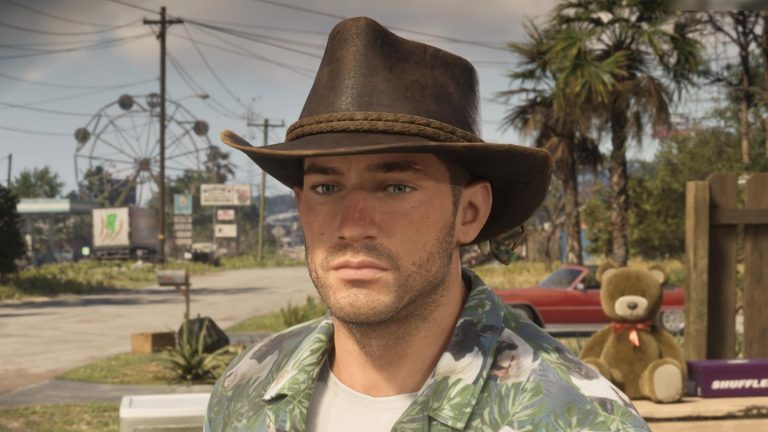
A familiar cowboy hat has become one of the quieter discoveries in Leonida. The Arthur Morgan hat in GTA 6 appears among ordinary secondhand goods at a Port Gellhorn yard sale. Its modest setting is part of the appeal: a recognisable object from another Rockstar world sits beside somebody’s unwanted belongings.
There is one detail worth settling before driving over. Although the widely shared account puts the price at $5, another published guide lists $35. The location and appearance are more consistently described than the cost. Treat the amount shown at your own purchase prompt as decisive.
Where the cowboy hat has been found
In PC Gamer’s discovery report, the sale sits toward the southern end of Port Gellhorn, northwest of the Dirt Merchants modification shop. Roadside yard sale signs lead into a small residential area. Balloons and household items help distinguish the driveway from its neighbours.
The reporter found the hat resting on a guitar case placed on a couch. Its purchase label is Genuine Cowboy Hat, rather than Arthur Morgan’s name. That is the useful identifier when checking the display; the familiar silhouette explains why players associate it with Red Dead Redemption 2.
For a first visit, follow the visible signs instead of searching every pavement at full speed. Park before inspecting the driveway and move through the items systematically. This is a small environmental discovery. The clues that matter are at street level, where rapid travel makes them easy to overlook.
The detail that invites recognition
Gfinity’s guide highlights the shape, colour and distinctive tied band as the basis for the comparison. Those observations support calling it an Arthur-inspired item. They do not establish that the same physical hat has travelled between the two fictional settings.
That distinction makes the reference more interesting. A recognisable design can carry a memory without bringing an entire character or timeline with it. Players supply the connection as soon as they notice the object. The sales label leaves the joke understated.
Why the reported price is inconsistent
PC Gamer describes buying the hat for $5. Gfinity lists $35 and places its acquisition in Chapter 2. Neither difference should be quietly edited out of a guide that relies on both accounts. At present, those reports do not explain whether progression, interaction choices or an error accounts for the mismatch.
The practical response is straightforward: carry a little more than the lowest reported amount and read the confirmation screen before purchasing. Do not invent a bargaining mechanic to explain the discrepancy. A plausible theory still needs evidence.
Check the item, not just the amount
A price alone is a poor way to identify an object at a yard sale. Confirm the item’s name and appearance together. If another piece of clothing costs the advertised amount, that does not make it the correct purchase. The object is the target; the price is supporting information.
Players comparing results can make the discussion more useful by recording the character, chapter and displayed cost in one image or short clip. That would help distinguish a repeatable difference from an incomplete recollection. Until then, a universal price claim would promise more certainty than the reports provide.
A crossover told through an ordinary object
Clothing also changes how players frame their own screenshots. A familiar hat against a waterfront skyline produces an immediate contrast between the object and its surroundings. That contrast is enough to tell a small visual story without dressing the entire character as someone else. Collectors can appreciate the reference on those terms: one recognisable piece, worn in an unfamiliar place, carrying an association that the rest of the outfit does not need to explain.
The Red Dead Redemption 2 Easter egg works because the setting treats the hat casually. There is no need for a monumental display to tell a returning player that the object matters. A yard sale gives it a different kind of value: something precious to one person can be unremarkable to someone else.
That tension is well suited to a game about looking closely. A prestigious shop would announce that the merchandise deserves attention. A driveway asks whether the player is paying attention already. Recognition becomes the reward before the transaction even happens.
The purchase also changes the nature of the reference. A background poster remains attached to a location. Wearable clothing can accompany the player elsewhere, turning a brief discovery into a personal choice about an outfit. That gives a small find a longer life than a passing sight gag.
There is no need to inflate the hat into proof of a shared storyline. Its strongest reading is simpler and more persuasive: a familiar visual signature appears where an attentive fan might notice it. The emotional connection belongs to the person who recognises it.
Approach the Port Gellhorn yard sale with that expectation. Look for the right item, check the actual asking price and enjoy the unlikely setting. The scene’s appeal is the moment an ordinary purchase becomes a remembered character.