
Meta description: Rockstar’s Leonida setting gives GTA 6 more than nostalgia, with Vice City surrounded by highways, wetlands, ports, and small towns.
World Building
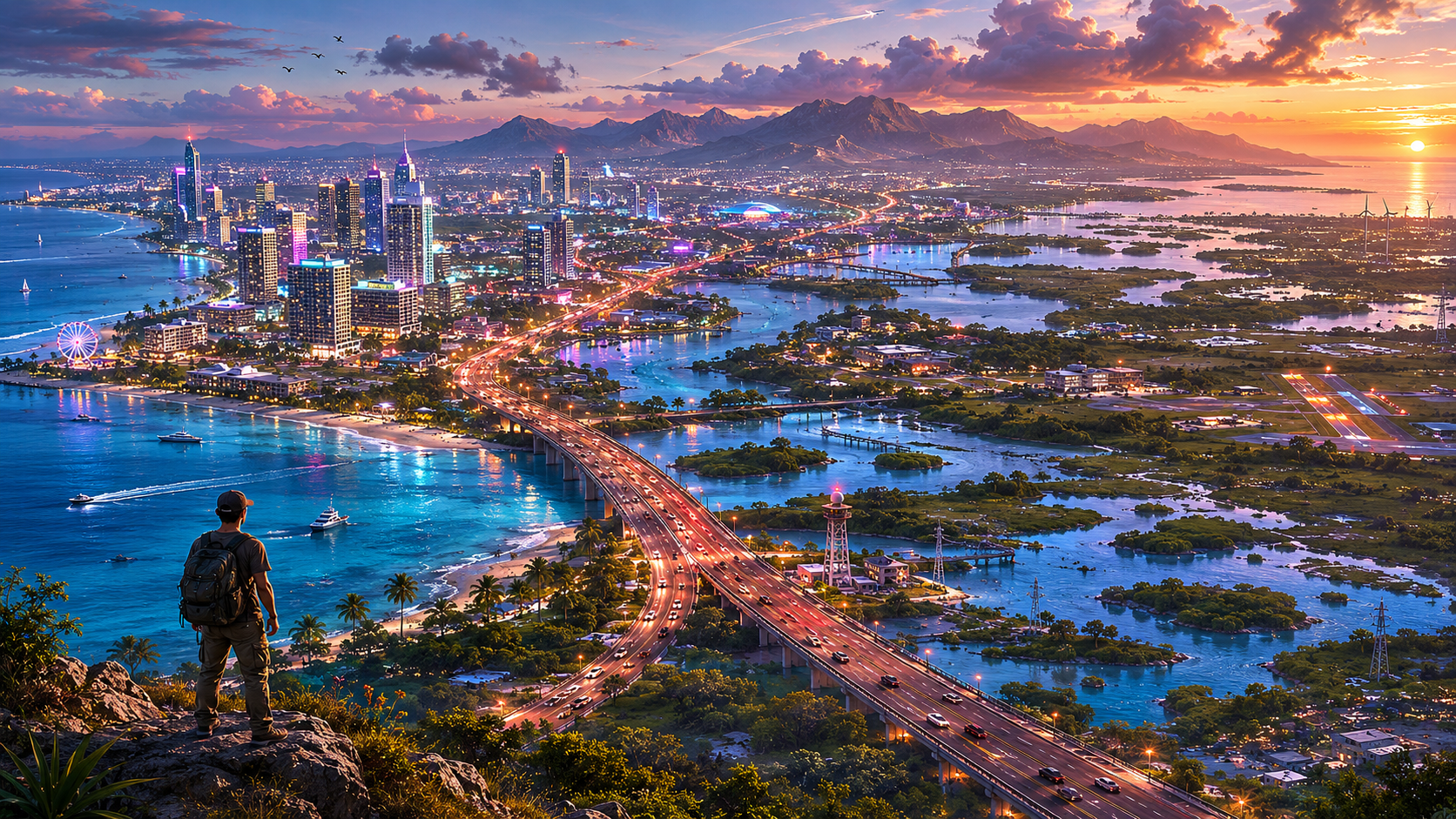
The GTA 6 map has become a story before anyone can drive across it. Rockstar has confirmed a return to Vice City and a broader state called Leonida. That alone gives fans enough material to study. Every road, bridge, beach, motel sign, marina, and swamp shot now gets treated like evidence.
This is not only nostalgia. Vice City carries the memory of neon streets and radio soaked style, but GTA 6 is clearly reaching beyond a single urban fantasy. Leonida appears to stretch into coastal islands, wetlands, industrial zones, rural edges, and tourist corridors. The promise is scale with personality.
Why Leonida matters
Rockstar could have sold a simple return to Vice City and still dominated headlines. Instead, it built the marketing around a state. That choice matters. A state creates social contrast. It allows the story to move from luxury high rises to back roads, from nightclubs to quiet docks, from viral street scenes to isolated criminal spaces.
Fans may be surprised if the most memorable missions happen outside the city. The broader map gives Rockstar room to vary pace. Dense urban chases can sit beside slow rural tension. A swamp road can feel as important as a downtown boulevard. The best open worlds understand rhythm, not just size.
The locations already have texture
Official material has pointed to areas such as the Leonida Keys, Grassrivers, Port Gellhorn, Ambrosia, and Mount Kalaga National Park. These names suggest different moods. Keys imply tourism, water, and escape routes. Grassrivers hints at wetlands and wildlife. Port Gellhorn sounds more industrial, perhaps rougher around the edges. Ambrosia could bring agriculture or processing plants. Mount Kalaga offers altitude and distance.
This changes everything for exploration. A map with varied regions gives players reasons to travel without needing constant missions. Discovery becomes its own reward. It also creates space for side stories, radio jokes, local businesses, and stranger encounters.
Map size is the wrong question
Fans love to measure maps, but square mileage is a blunt tool. The better question is density. Does the world react? Do interiors matter? Do traffic patterns change by neighborhood? Do police, weather, crowds, and wildlife feel connected to place? A smaller map with stronger texture can beat a larger empty one.
Rockstar’s best environments feel authored even when players wander off mission. That is why Rockstar open world design remains influential. It is not only about freedom. It is about making freedom feel observed, mocked, and occasionally punished.
Vice City still carries the spotlight
None of this reduces Vice City’s role. The city is the icon. It gives GTA 6 instant color and cultural shorthand. Modern Vice City can parody social media fame, real estate excess, nightlife, wellness culture, luxury crime, and climate anxiety without needing heavy explanation. The city sells the poster. Leonida may sell the hours.
Why fans are mapping screenshots
The community’s map work is part detective hobby, part anticipation therapy. With no playable build, fans create structure from fragments. A hotel balcony becomes a landmark. A highway curve becomes a route. A background mountain becomes a debate. Some guesses will be wrong, but the process keeps the world alive before launch.
Rockstar knows this. Its screenshots are clean enough to reward inspection, but not complete enough to settle arguments. That is effective marketing. It gives just enough clarity to spark confident theories, then lets uncertainty do the rest.
The takeaway
Leonida may be the smartest expansion of the Vice City idea. It keeps the brand recognition while giving Rockstar a bigger canvas for satire, crime, travel, and contrast. The map is already famous, even unfinished in public. When players finally arrive, the real test will be whether Leonida feels like a place, not a checklist. That is the difference between a large world and a lasting one.
The real test is movement
A map is not only judged from above. It is judged through movement. The drive from the city to the coast must feel different from the ride into a rural town. A bridge should change the pace. A storm should make a familiar road feel new. If Leonida works, travel itself will become storytelling.
That is where Rockstar can separate detail from decoration. A beautiful map impresses in screenshots. A responsive map stays interesting after one hundred hours. The promise of Leonida is not just that it looks big. It is that each region could teach players a different rhythm.
That is why map talk should stay grounded. The confirmed names are useful. Fan reconstructions are fun. But the final geography will only become clear when Rockstar opens the world itself.