
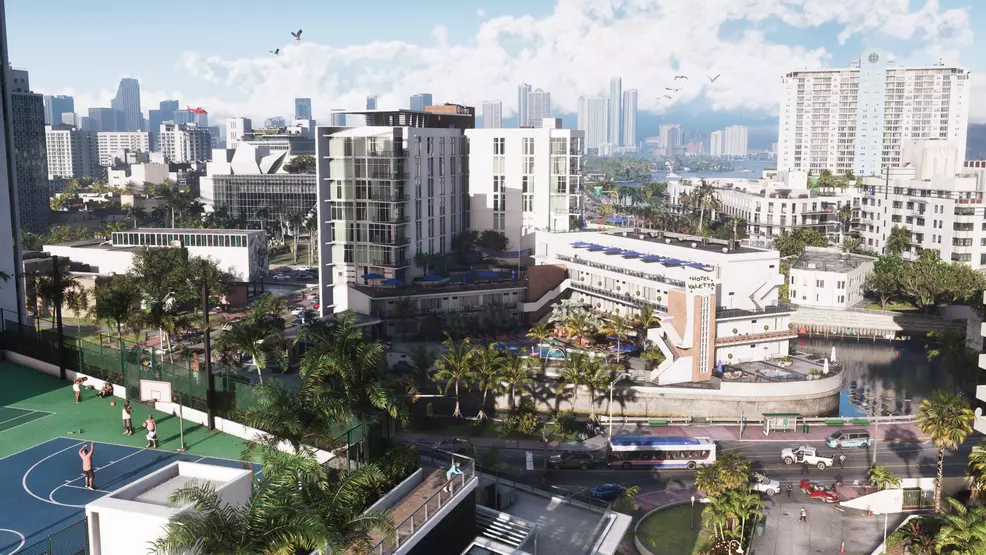
GTA 6’s map promises greater scale and more interiors. Here is what Rockstar’s comparisons reveal and what remains unknown.
The map debate surrounding Grand Theft Auto VI has moved beyond speculation about coastlines. Recent developer comments suggest the playable world is substantially larger than GTA 5’s Los Santos and Blaine County, but the more revealing promise concerns what players will find after leaving the main road.
Rockstar’s reported comparison places the new environment at roughly twice the size of GTA 5’s map. Accounts of an Edge magazine discussion also describe a landmass approaching the combined playable scale of GTA IV, GTA V and Red Dead Redemption 2. Those are developer comparisons, not an official square-mile survey with published boundaries and measurement rules.
Why one map number rarely tells the full story
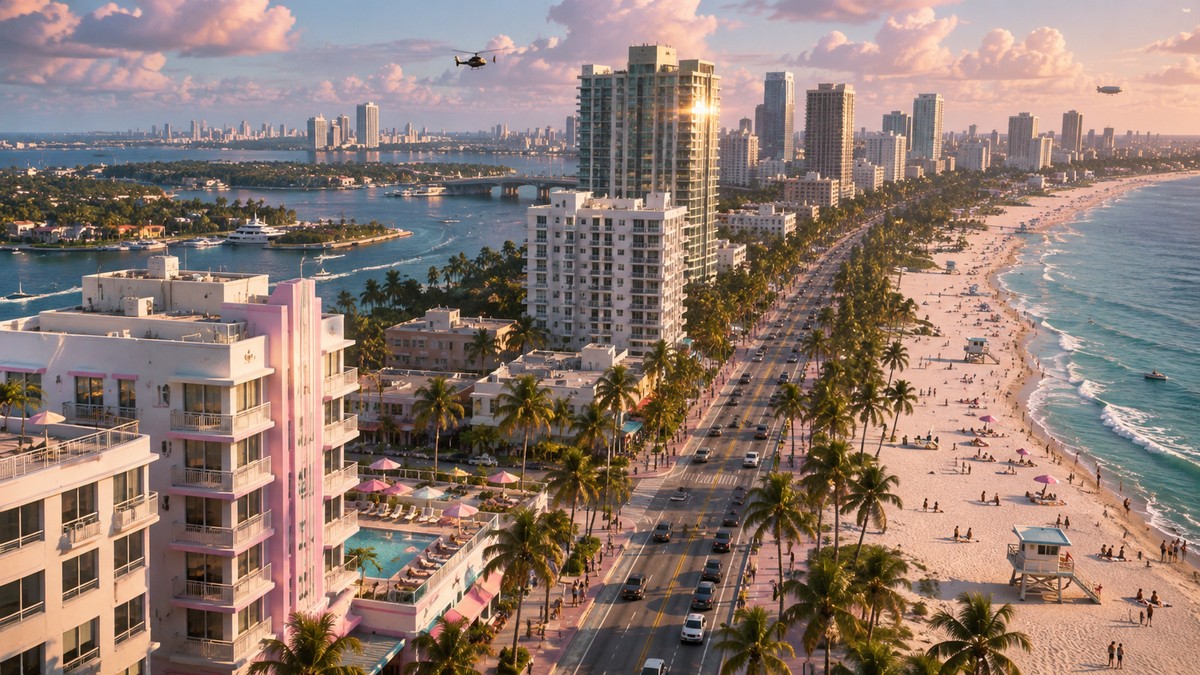
A driving game can feel expansive because highways stretch across empty countryside. Another can feel just as large with shorter journeys, winding streets and buildings worth exploring. The design of GTA 6’s map appears to put more emphasis on the second quality: density.
Vice City serves as the urban centre, but Leonida extends into wetlands, smaller settlements, beaches and the surrounding countryside. A single journey might move from a crowded shopping district to a remote roadside stop. The value of that contrast depends on whether those places offer distinct activities and reactions.
Players have compared screenshots, trailer frames and community cartography projects for years. Such efforts can identify recognizable landmarks, but the fan-made lines between them should not be mistaken for Rockstar’s final borders. Even a convincing geographic reconstruction may miss roads, altered neighbourhoods or areas kept out of marketing materials.
Interiors may change how exploration works
Rockstar North co-studio lead Aaron Garbut has talked about considerably more explorable interiors than previous entries. The phrase often repeated from developer coverage is an order of magnitude more. That does not give a verified total of buildings that can be entered, and it does not mean every apartment or storefront will open.
Still, it changes the scale of the ambition. In many open-world games, the player spends most of the journey looking at architecture from the street. If GTA 6 interiors contain meaningful spaces, businesses and encounters, a short walk through a neighbourhood could provide more variety than a lengthy drive across an empty region.
An enterable building also needs a reason to exist. A shop with distinct staff behaviour, a small event and useful services is more compelling than ten doors leading to indistinguishable rooms.
Vice City is only one part of Leonida
The choice to return to Vice City creates an immediate visual anchor: bright commercial streets, waterfront views and the familiar contrast between wealth and poverty. Yet Rockstar’s fictional state is not limited to the city itself. Promotional material also shows rural communities, wildlife, water routes and environments inspired by Florida beyond its best-known tourist strips.
These settings could help the game’s missions feel different without changing the basic controls. A chase through a dense city demands quick turns and traffic awareness. An encounter on a remote road produces a different rhythm. Waterways introduce another set of routes, while isolated communities can give writers a chance to introduce local personalities and satire.
That geographical range is a stronger indicator of ambition than a boast about surface area. A world should reward the decision to leave its most famous location.
What the comparisons cannot establish
Rockstar has not released a definitive public map with a scale bar suitable for checking every popular estimate. Fan calculations also vary depending on whether they include open water, inaccessible scenery or just walkable land. Comparing Red Dead Redemption 2 to GTA V adds another complication because travel speed and terrain are so different.
Consequently, headlines claiming one exact size should be read alongside their method. A screenshot measured against real-world Miami is not the same as a developer-provided map specification. The latter still may involve shorthand rather than a precise figure.
The small discoveries will decide whether the promise holds
The memorable part of GTA V’s map was not always its size. It was often a mountain road at sunset, a strange roadside conversation or an unexpected detour. Red Dead Redemption 2 pushed that idea further by giving wilderness exploration its own pace and personality.
GTA 6 world design appears intended to extend those lessons. Rockstar’s developers have emphasised the human attention paid to individual spaces. That raises expectations, especially for players who want meaningful interaction rather than a landscape built largely for screenshots.
There will also be practical questions at launch. How early can players travel across Leonida? Which interiors are freely accessible? Are remote communities as reactive as Vice City? Does exploration remain interesting after the main storyline ends?
For now, the strongest reading of the map news is straightforward. Rockstar is promising a broader world, but its more important wager is that ordinary locations will hold enough detail to justify visiting them. The roads may be longer. The reasons to stop are what matter.