Rockstar previews six GTA 6 radio stations. Discover the sounds shaping Leonida and why its in-game broadcasts matter.
Before players know every street in Leonida, many will know the voices coming through their car speakers. Rockstar has previewed six GTA 6 radio stations, offering a first substantial impression of how music, presenters and local culture will shape the newest Grand Theft Auto setting.
The previews cover Latin music, country, African sounds, metal, pop and Southern rap. The selection is broad, but the interesting point is not simply the number of genres. It is the way each station appears to carry its own identity, presenters and audience.
Six frequencies, six different ideas of Leonida
Rockstar’s official music page identifies Cocoteo FM as a home for modern Latin sounds, with El Martillo and La Gata presenting. Back Country Radio takes a rural direction through country music, while AfroBANK FM highlights amapiano, African classics and related styles.
The Chamber 106.6 offers metal. Flash FM returns as a familiar Vice City name, and Dirty South Classics focuses on regional rap and hip-hop. That lineup establishes a musical geography before the player has explored the whole state.
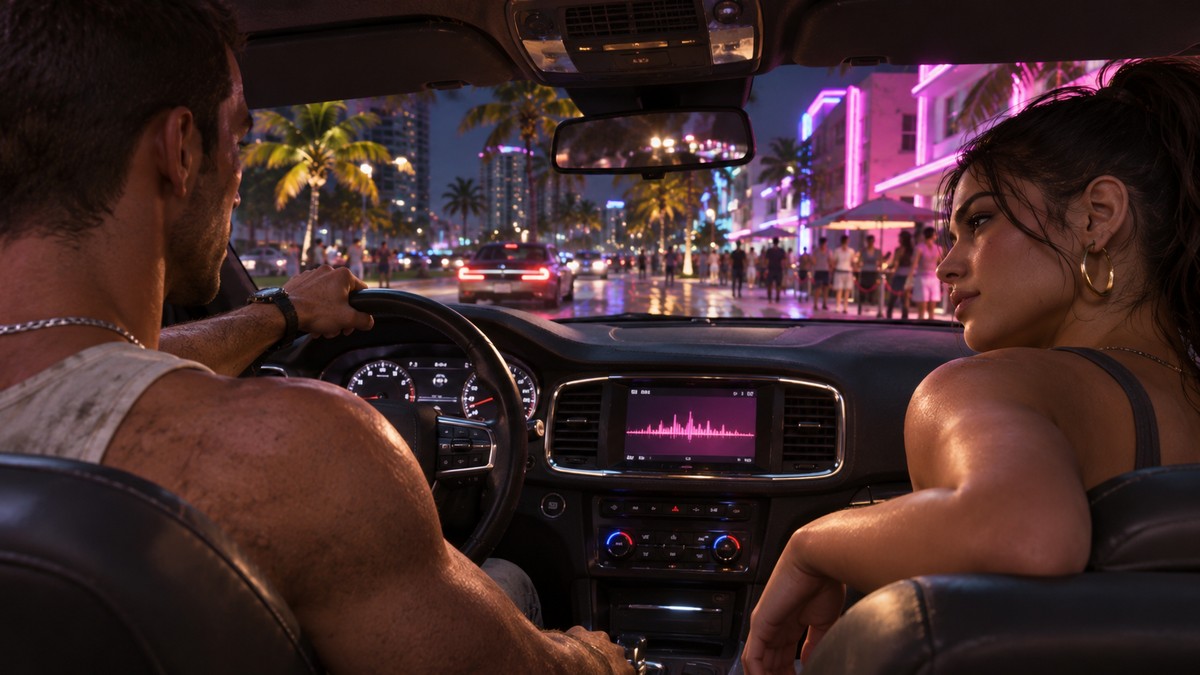
Driving through an expensive beachfront district while hearing one station creates a different atmosphere from following a rural road with another. GTA 6’s soundtrack can use those contrasts to make locations feel culturally distinct without interrupting the journey for exposition.
Flash FM’s return carries a particular weight
For long-time players, Flash FM is more than a station label. Its earlier appearances helped define the fictional city’s pop identity. Bringing it back invites comparison with the series’ musical past, especially the 1980s atmosphere of the original Vice City.
Yet the new game takes place in a contemporary world. Its music needs to acknowledge the old identity without becoming trapped by nostalgia. Rockstar’s selection of Robyn and Alex as hosts reflects that balancing act: an established brand presented through a different era’s voices and tastes.
The previews also suggest playful exchanges between hosts. That detail matters. Grand Theft Auto stations are remembered as much for their presenters, fake advertisements and interruptions as for the licensed tracks themselves.
A soundtrack is also a form of world building
Grand Theft Auto V offered a sprawling musical selection, but its stations often worked as cultural commentary. The right song could support a long night drive while a sarcastic presenter punctured the mood a few moments later. That tension is part of Rockstar’s identity.
In Grand Theft Auto VI, the programme mix may do more to reflect a state with several communities and social scenes. A Latin station can feel rooted in the city. Country programming can lend personality to remote highways. Metal and Southern rap introduce still other viewpoints.
There is an editorial question beneath those choices. How does a fictional radio network parody a recognisable music industry without making every presenter sound identical? The answer depends on writing and performance, not merely the number of licences Rockstar has secured.
What about podcasts and listening on foot?
Rockstar’s official music information refers to radio and podcasts, expanding the range of audio players may encounter. Secondary reporting has also discussed portable listening options. The full interface and exact availability of these features should be judged from the finished game rather than assumed from short previews.
Podcasts could give writers room for longer satirical conversations, while radio remains ideal for brief interruptions and musical discovery. However, an audio library of this scale raises familiar concerns: repeated segments, host chatter interrupting favourite songs and the difficulty of hearing complete programmes during frantic missions.
An effective system needs to balance variety with the player’s freedom to tune out.
The songs are only half the experience
There is always a temptation to judge a game’s soundtrack by identifying famous artists in a trailer. Those tracks generate excitement, but everyday driving ultimately decides which songs become attached to players’ memories.
A forgotten album cut heard during a late-night escape can mean more than the biggest licensed hit. The interplay between a track, a district and an unscripted moment is what distinguishes radio in an open-world game from a playlist outside it.
Rockstar has not yet revealed the full final station count or every track available at launch. Claims that a preview represents the complete GTA 6 music list go beyond what has been shown.
The six available stations already suggest a carefully divided soundscape. When Grand Theft Auto VI arrives on November 19, 2026, players will discover whether the full catalogue delivers the same range. The strongest soundtrack will not merely fill silence. It will give each journey a sense of place.